
Net 30 Vendor Accounts give a business 30 days to pay an invoice in full under agreed trade-credit terms. The immediate benefit is cash-flow flexibility. For a business building commercial credit, the potential second benefit is reported payment history.
But there’s an important distinction: Net 30 is a payment term, not a guarantee of credit reporting. A vendor may offer Net 30 terms without reporting payment activity to a commercial credit bureau. If the account is being opened specifically to help establish business credit, the business owner should verify whether the vendor reports, which bureau or bureaus receive the data, and how that reporting actually works.
Why Reported Payment History Matters
Commercial credit files help lenders, suppliers, and other business partners evaluate financial risk. Dun & Bradstreet explains that payment experiences with vendors can contribute to a business credit file, while Experian’s business-credit glossary describes tradeline data as reported payment history over time.
How a Net 30 Account Can Become a Business Tradeline
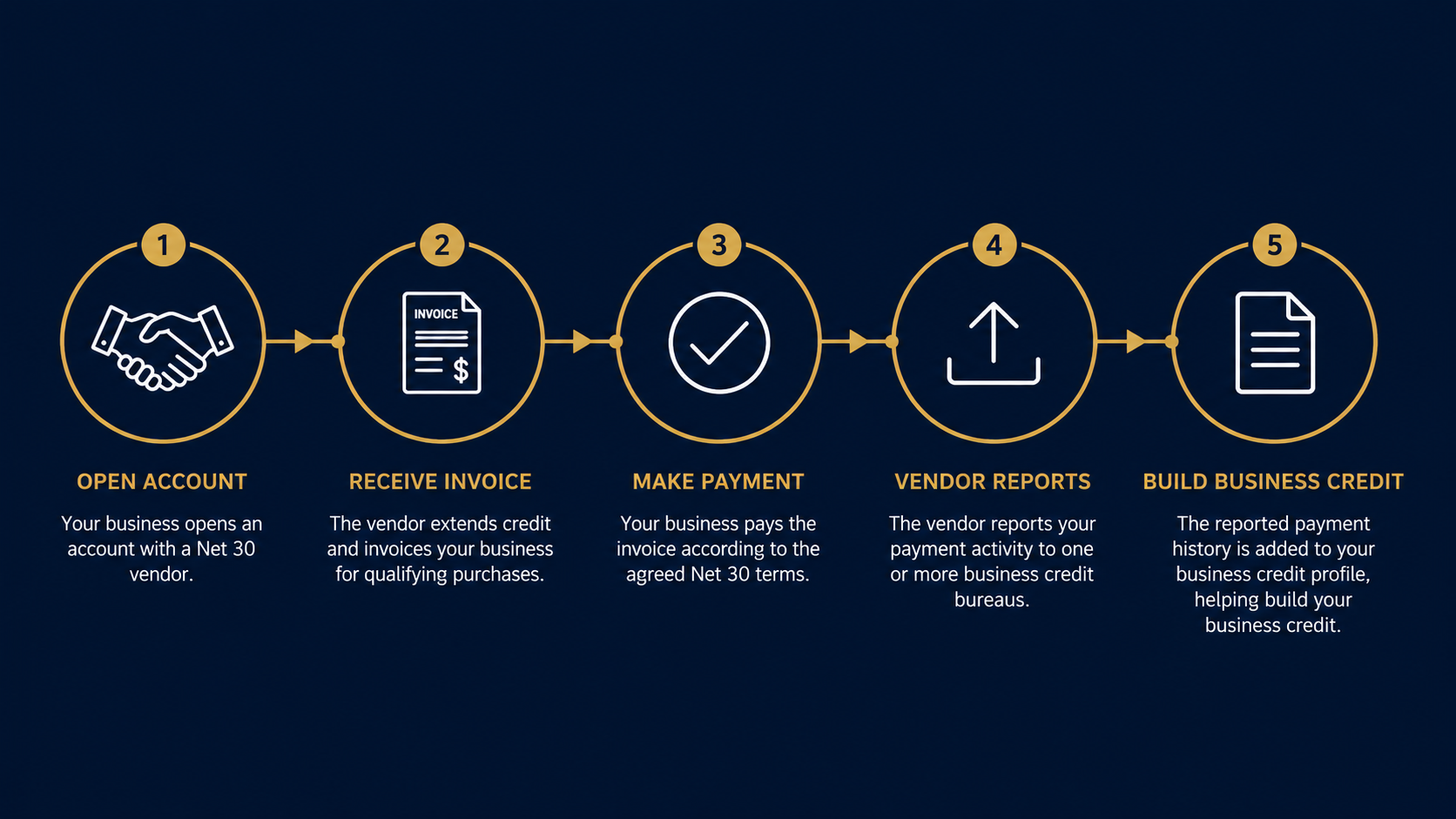
- Your business opens an account with a vendor that offers Net 30 terms.
- The vendor extends credit and invoices your company for qualifying purchases.
- Your business pays the invoice according to the agreed terms.
- The vendor reports the payment experience to a commercial credit bureau, where applicable.
- The bureau processes and associates the information with the appropriate business credit file.
D&B notes that trade references are subject to review, verification, and acceptance, and Experian explains that tradelines represent reported lines of credit or supplier payment experiences. This is why a business should not assume that every Net 30 account will automatically appear on every commercial credit report.
Which Business Credit Bureaus May Receive Net 30 Reporting?
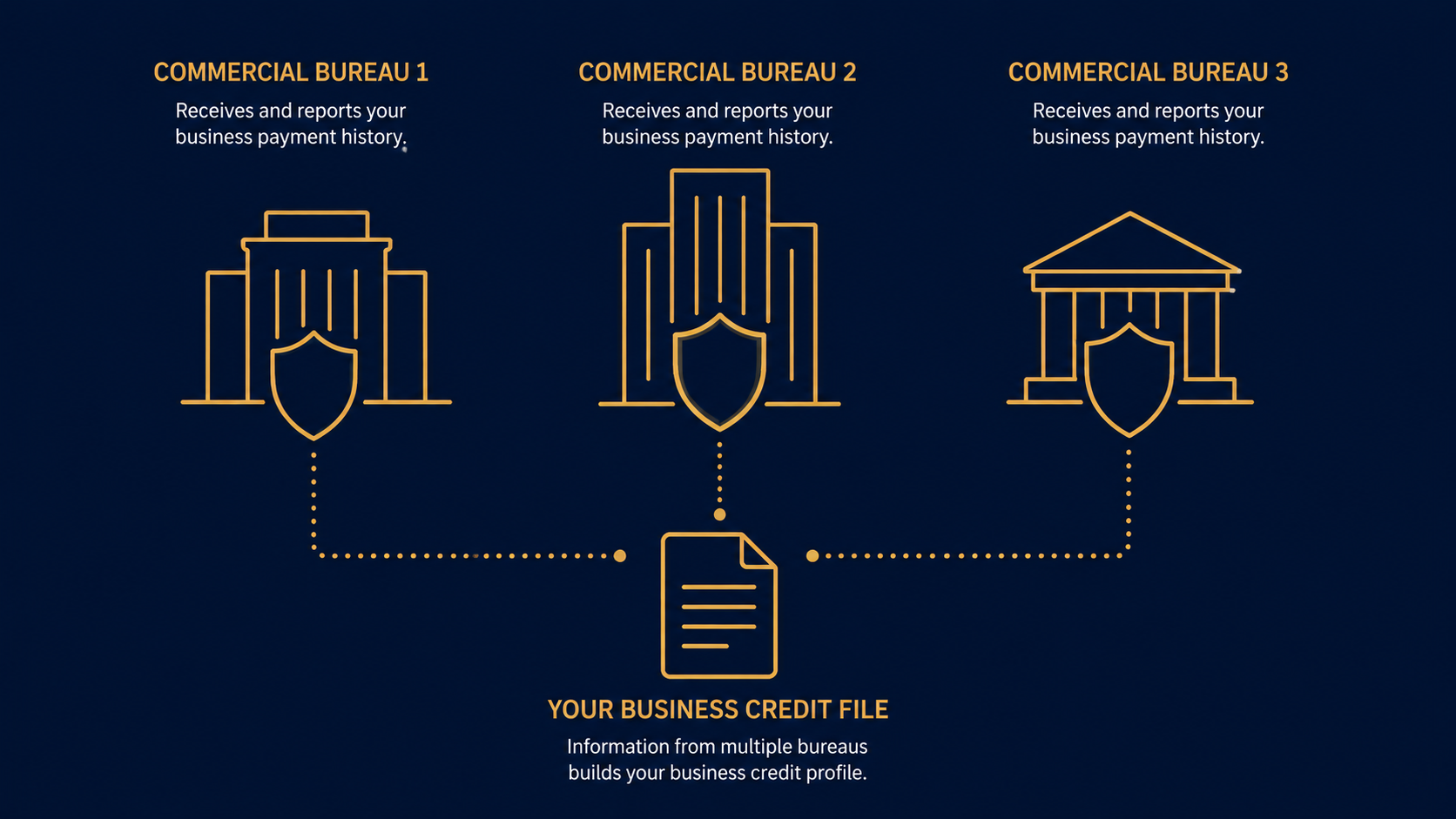
Dun & Bradstreet
Dun & Bradstreet maintains commercial business information and offers the PAYDEX score. Its D-U-N-S Number is a unique nine-digit identifier linked to a D&B business credit file. A D-U-N-S Number identifies the business; it is not itself a credit score.
Experian Business
Experian Business maintains commercial credit information that can include trade payment experiences and other business data. Experian describes a tradeline as a reported line of credit from a supplier or account and explains that payment experiences can reflect early, on-time, and late payment patterns.
Equifax Business
Equifax also provides commercial credit information used in business-credit evaluation. Because reporting relationships and scoring models differ, information reported to one bureau should not be assumed to appear identically across all bureaus.
Do You Need a D-U-N-S Number for a Net 30 Account?

Not necessarily. A D-U-N-S Number is a business identifier used within the Dun & Bradstreet system, but D&B states that it is not required to operate a business. Some vendors may request it, particularly when their reporting relationship involves D&B.
Think of it this way:
- D-U-N-S Number = business identification
- Reported payment history = credit information
Having an identifier does not, by itself, create strong business credit.
What Do You Need to Apply for a Net 30 Vendor Account?
Vendor requirements vary. A supplier may ask for:
- Legal business name
- EIN
- Business address and phone number
- Business website or email
- State registration information
- Banking information
- Industry or business type
- D-U-N-S Number, where applicable
- Trade or credit references
Some vendors may also evaluate the business owner or require a personal guarantee. There is no universal rule that Net 30 accounts require no credit check or personal guarantee.
How to Choose Net 30 Vendor Accounts That Actually Help
1. Confirm That the Vendor Reports
Ask the vendor whether it reports customer payment activity to commercial credit bureaus. Do not rely solely on the words “Net 30.”
2. Confirm Which Bureau or Bureaus Receive the Data
Reporting to Dun & Bradstreet does not automatically mean reporting to Experian Business or Equifax Business. Confirm the actual reporting relationship before opening an account for credit-building purposes.
3. Keep Business Information Consistent
Use the same legal business name, address, phone number, and other identifying information across state filings, banking records, vendor applications, and commercial credit profiles. Consistency helps reduce avoidable identification and matching problems.
4. Pay According to the Agreed Terms
D&B recommends on-time or early payments as part of responsible business-credit management. Payment behavior can affect the information available to commercial credit bureaus.
5. Monitor Your Business Credit Reports
Credit-building is not a one-time task. Review your commercial credit information periodically and address missing or inaccurate information with the appropriate vendor or bureau.
Common Net 30 Mistakes Business Owners Make

Mistake #1: Assuming Every Net 30 Account Builds Credit
Net 30 describes payment terms. It does not automatically mean the vendor reports to a credit bureau.
Mistake #2: Opening Accounts You Do Not Need
A business should not purchase unnecessary products simply to create credit activity. Credit-building should support legitimate business operations and responsible financial management.
Mistake #3: Focusing on One Bureau
A commercial credit profile can differ between bureaus. Business owners should understand which bureaus matter for the financing products they are pursuing rather than assuming one report tells the whole story.
Mistake #4: Expecting Net 30 Accounts to Guarantee Financing
Business credit is one part of a lender’s evaluation. Depending on the lender and product, underwriting may also consider personal credit, revenue, cash flow, time in business, debt, financial statements, business structure, collateral, and repayment ability.
Mistake #5: Chasing a Magic Number of Accounts
There is no universal number of Net 30 accounts that guarantees strong business credit or financing approval. Quality and accuracy of reporting, payment behavior, history, and the overall commercial profile matter more than hitting an arbitrary account count.
Net 30 Vendor Accounts vs. Business Tradelines
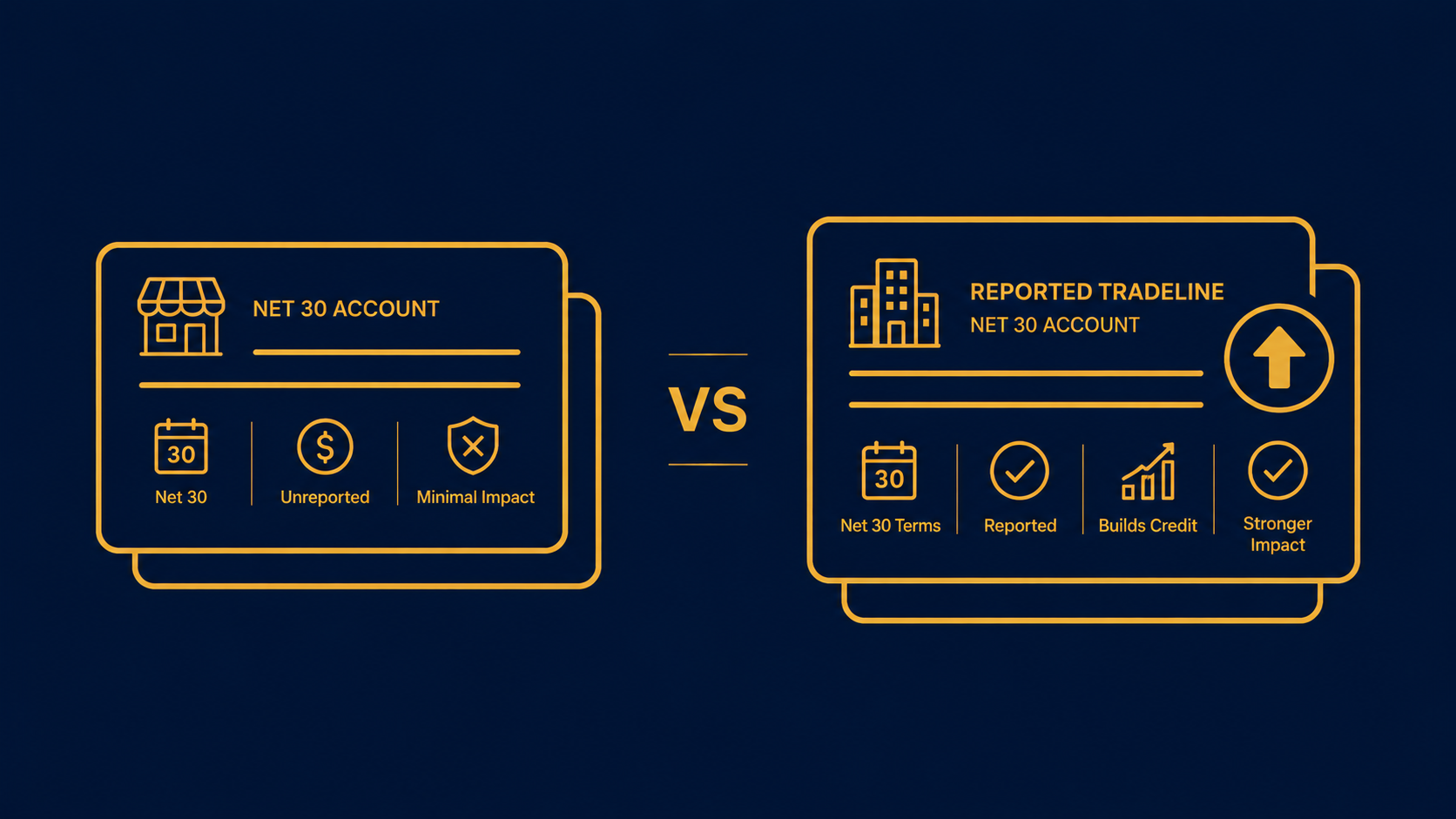
A Net 30 account describes the payment terms between a business and a vendor. A business tradeline generally refers to a reported credit account or payment experience that appears in a commercial credit file.
Net 30 = the payment terms. Tradeline = the reported credit/payment experience.
A Net 30 vendor account can therefore become a reported business tradeline when the relevant payment activity is reported and accepted by a commercial credit bureau. Not every Net 30 account will become a tradeline on every bureau.
For businesses interested in broader commercial credit development, see Tradeline Associates: Business Tradelines
How Net 30 Vendor Accounts Fit Into a Funding Strategy
Net 30 accounts can address one part of business-credit development: reported trade-payment history. They do not solve every issue a lender may identify.
A funding-ready business should also consider:
- Personal credit strength
- Business credit history
- Business age and structure
- Revenue and cash flow
- Banking activity
- Financial statements and documentation
- Existing debt and obligations
- Industry and business model
- The requirements of the specific lender and financing product
Tradeline Associates positions business credit development as part of a broader funding-preparation process that can include business structure, compliance, commercial credit history, and funding positioning.
Where Tradeline Associates Fits In
If your business credit file is thin, incomplete, or difficult to understand, the first step is to determine what is actually being reported and what a lender could see today. Tradeline Associates helps business owners with business credit development, commercial tradelines, and broader funding preparation.
Explore Business Tradelines or Schedule a Consultation to discuss your current position and next steps.
Frequently Asked Questions
Do Net 30 Vendor Accounts automatically build business credit?
No. Net 30 is a payment term. The account generally needs to generate reportable payment information that is submitted to and accepted by a commercial credit bureau.
Does every Net 30 vendor report to Dun & Bradstreet?
No. Reporting practices vary by vendor. Confirm whether the vendor reports and which bureau receives the information.
Is a D-U-N-S Number required to build business credit?
No. A D-U-N-S Number identifies a business within the D&B system, but having one alone does not establish strong business credit.
How many Net 30 accounts does a business need?
There is no universal number that guarantees strong business credit or financing approval. Focus on legitimate accounts, accurate reporting, and responsible payment behavior.
Do Net 30 accounts guarantee loan approval?
No. Lenders consider multiple factors, which can include business and personal credit, revenue, cash flow, time in business, financial documentation, and repayment ability.
Should I open Net 30 accounts I do not actually need?
Businesses should generally avoid unnecessary purchases solely for credit-building purposes. Vendor accounts should make sense for legitimate business operations.
What should I do if a vendor says it reports but I cannot find the account?
Confirm which bureau the vendor reports to, the expected reporting timeframe, and that your business identity information is accurate. Then contact the vendor and the relevant bureau if the information is missing or inaccurate.
The Bottom Line
Net 30 Vendor Accounts can be a practical part of a business-credit strategy, but they are not a shortcut to automatic financing. The key question is not simply whether a vendor offers Net 30 terms. It is whether the account creates legitimate, accurate, and reportable payment history that contributes to the business’s commercial credit profile.
Build that history responsibly, keep your business information consistent, monitor your commercial credit reports, and remember that business credit is only one component of a lender’s decision. For businesses preparing for financing, the strongest approach is to evaluate the entire financial picture rather than relying on one type of account or one credit score.
Ready to review your business-credit position? Contact Tradeline Associates