Personal Credit Business Funding Approval: What You Need to Know
Most business owners believe that forming an LLC or getting an EIN separates their financial life from their personal history. It is a reasonable assumption. It is also wrong — at least in the early years of a business.
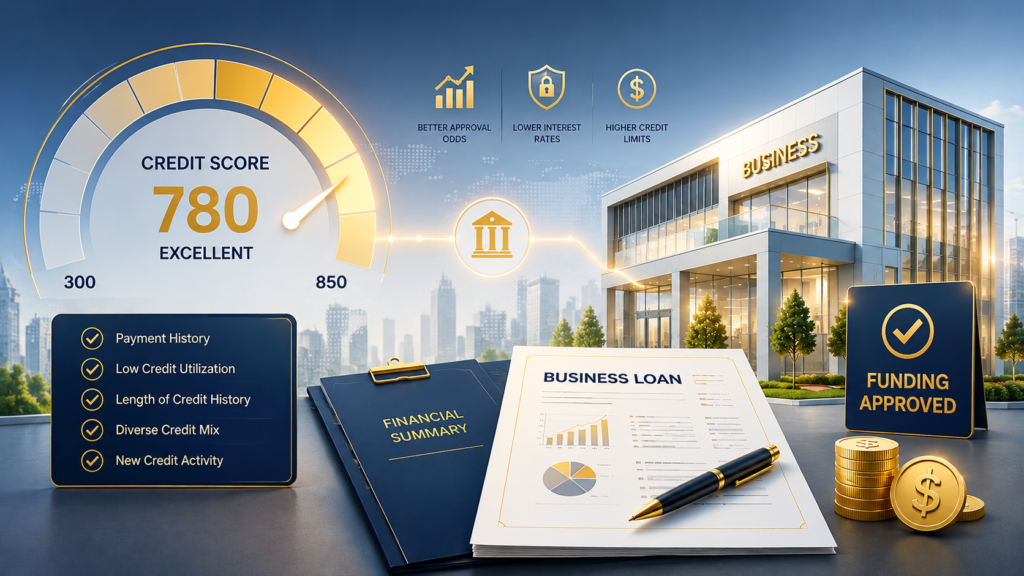
When it comes to personal credit business funding approval, lenders are looking at both sides of your financial picture. If your business is new or does not yet have a strong standalone credit profile, your personal credit score becomes one of the most important factors in whether you get approved, how much you qualify for, and what interest rate you pay. Understanding this early gives you a real opportunity to change the outcome before you ever submit an application.
Why Your Personal Credit Score Affects Business Loans
When a business is young, there simply is not enough commercial credit history for a lender to evaluate on its own. Your business may have a bank account, an EIN, and even some revenue — but without a documented track record of managing business debt, lenders need another signal.
That signal is your personal credit score. A personal credit score is essentially a snapshot of how reliably you manage debt. Lenders use it to gauge how risky it is to lend you money, which directly affects your approval odds, interest rates, and credit limits. The most widely used model is the FICO score, which pulls data from Experian, Equifax, and TransUnion on a scale of 300 to 850.
For businesses with fewer than 20 employees, personal and business credit scores are closely linked. Your personal credit history may be used as a reference if you do not have an established business credit history. This is not a policy quirk — it is simply how lenders manage risk when the business record is too thin to stand alone.
The Score Thresholds That Actually Matter
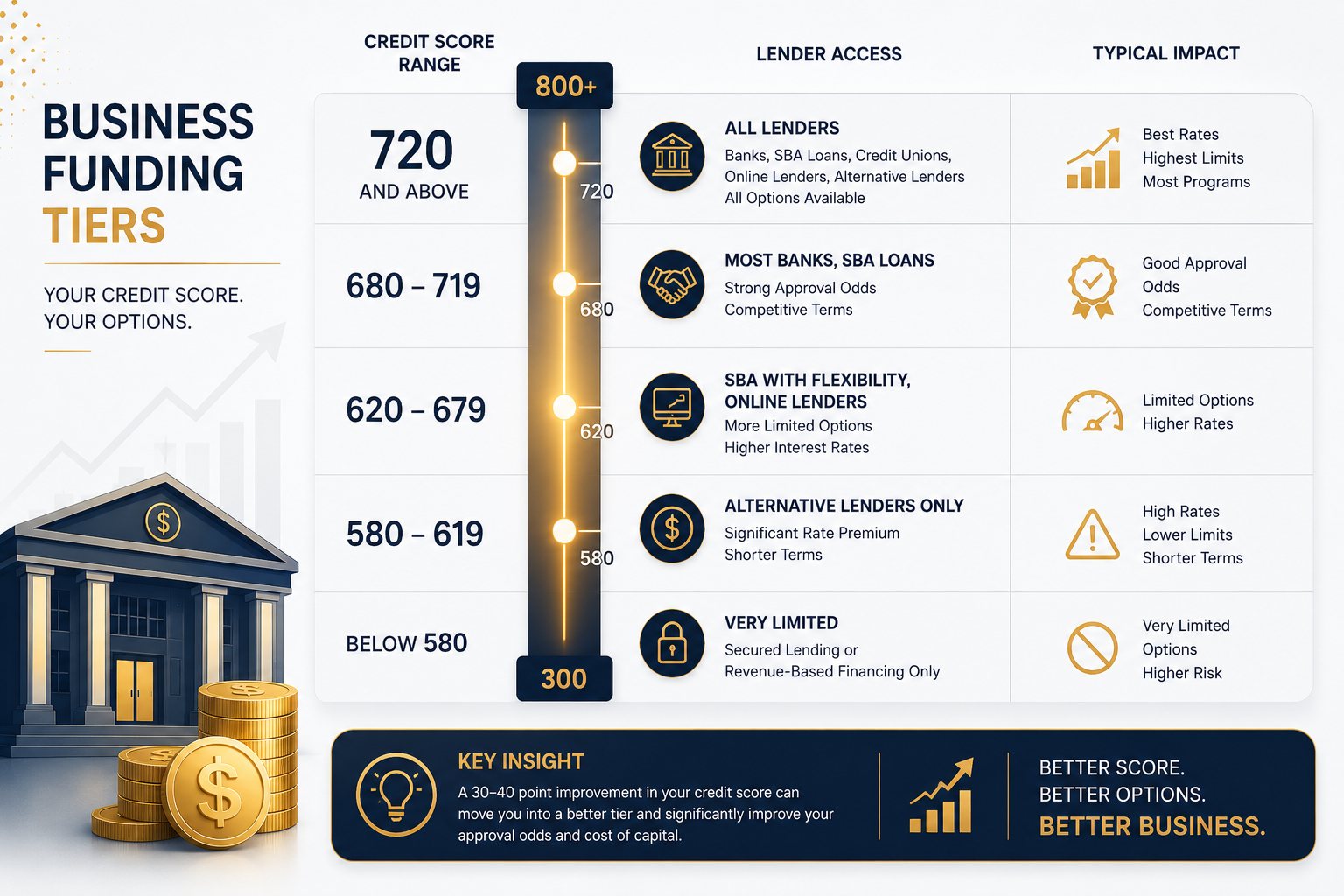
Not all credit score ranges unlock the same options. Here is a practical breakdown of what different score ranges mean for your funding access:
| Credit Score Range | Lender Access | Typical Impact |
|---|---|---|
| 720 and above | All lenders | Best rates, highest loan amounts, most programs |
| 680–719 | Most banks offer SBA loans | Good approval odds, competitive terms |
| 620–679 | SBA with flexibility, online lenders | More limited options, higher rates |
| 580–619 | Alternative lenders only | Significant rate premium, shorter terms |
| Below 580 | Very limited | Secured or revenue-based financing only |
There is no industry-wide credit score requirement for small business loans. Still, a higher credit score of 670 or above generally means you will be eligible for funding with more attractive terms.
The key insight here is not that you need a perfect score — it is that every range unlocks a different tier of options. A 30 to 40-point improvement can move you from one tier to the next and meaningfully change both your approval odds and the cost of capital you can access.
How the SBA Evaluates Personal Credit
Many business owners target SBA loans because of their favorable rates and longer terms. The SBA does not set minimum credit score requirements for its loans. Instead, the U.S. Small Business Administration requires SBA-approved lenders to evaluate a borrower’s overall creditworthiness and financial stability using prudent commercial lending standards. In practice, most SBA-approved lenders look for personal credit scores in the 650 to 680 range as a baseline, with scores above 720 putting applicants in the best position for approval.
What Damages Your Personal Credit Most — And Why Lenders Care
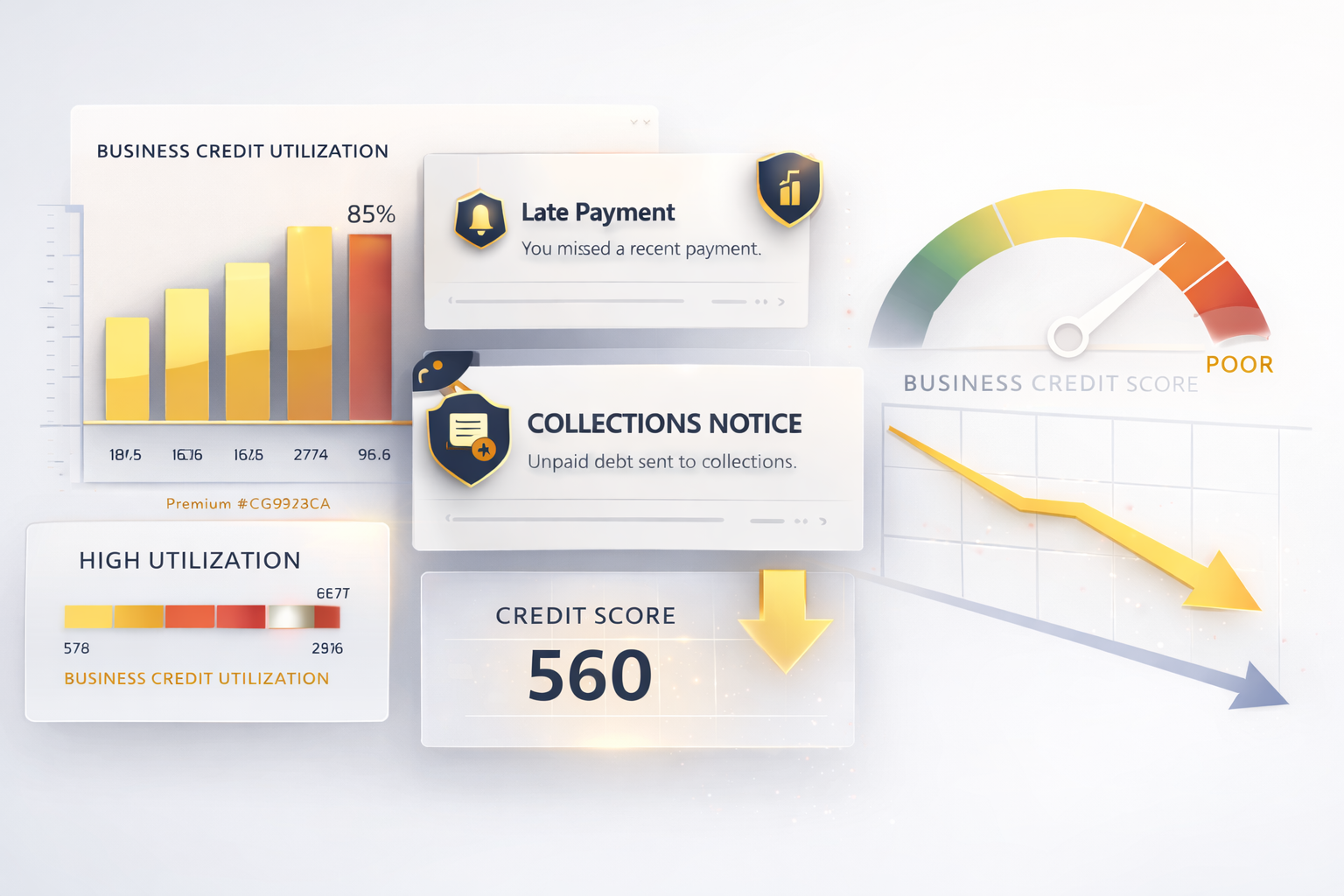
The FICO Score is calculated based on five main components: payment history at 35%, amounts owed at 30%, length of credit history at 15%, new credit at 10%, and credit mix at 10%. Understanding this breakdown tells you exactly where to focus your energy.
Here is what lenders react to most strongly when they pull your report:
- Recent late payments: A single 90-day late payment on a major account can drop your score significantly and signal to lenders that you struggle to manage obligations under pressure. The more recent the late payment, the harder it hits. Lenders are not just looking at the score — they are reading the pattern behind it.
- High credit utilization: If your personal credit cards are near their limits, your utilization ratio is high, and your score suffers for it. Lenders also interpret high utilization as a sign of financial stress — someone who is already stretched thin before they even take on new business debt.
- Charge-offs and collections: These represent debts that were abandoned and are treated as clear evidence of credit failure. They stay on your report for up to seven years and can be disqualifying for traditional lenders even when the balance is small.
- Recent bankruptcy: Most conventional lenders will not approve business funding applications when a bankruptcy was discharged within the last two to four years. The window varies by lender and loan type, but this is one of the most serious disqualifiers in the approval process.
How to Fix Your Personal Credit Before You Apply
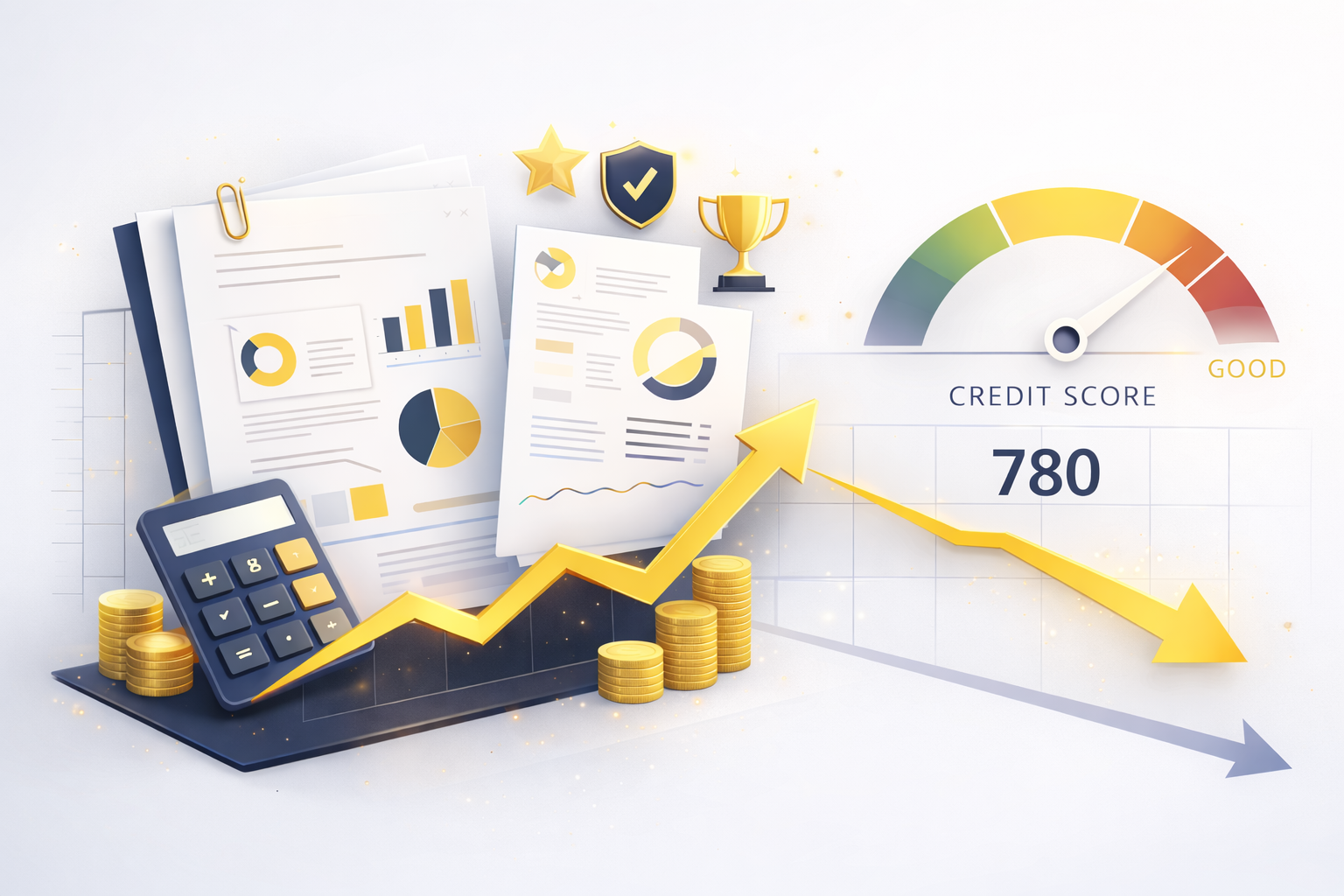
The good news is that credit is not fixed. Several of the factors that hurt your score are also the ones you can change most quickly with deliberate action.
Step 1 — Pull All Three Bureau Reports First
Before doing anything else, get your free credit reports from all three bureaus at AnnualCreditReport.com. Go through each report line by line. Look for incorrect balances, accounts that do not belong to you, payments reported late that were made on time, and any accounts you do not recognize. If you spot incorrect information, such as fraudulent charges or accounts, act immediately. It can take some time and effort to correct credit report errors, and the sooner they are cleared, the sooner your score will improve.
Disputing errors is one of the fastest paths to a score increase because you are not waiting for behavior to change — you are correcting inaccurate data. Some disputes resolve within 30 days.
Step 2 — Reduce Credit Card Utilization
Lowering a high credit utilization ratio could be the fastest way to improve a credit score. Your credit utilization is the percentage of your credit limit that is in use, calculated both on individual cards and overall.
Getting below 30% across all cards has a meaningful positive effect. Getting below 10% on each card individually has an even stronger impact. Utilization is recalculated every time your card statement closes, which means paying down balances shows up in your score within one to two billing cycles — faster than almost any other strategy.
Step 3 — Do Not Close Old Accounts
This is one of the most common mistakes people make when trying to clean up their credit. Closing an old card feels like tidying up. What it actually does is reduce your total available credit (which increases your utilization ratio) and shorten your average credit history length — both of which hurt your score. If the account is open, in good standing, and has no annual fee, leave it open. It is helping you more than it may seem.
Step 4 — Avoid New Hard Inquiries Before Applying
Every time you apply for new credit, a hard inquiry is added to your report and can temporarily lower your score. Hard inquiries remain on your credit reports for up to two years, but they only impact your FICO score for up to one year. In the 90 days before you plan to apply for business funding, avoid opening new personal credit accounts.
Build Business Credit at the Same Time
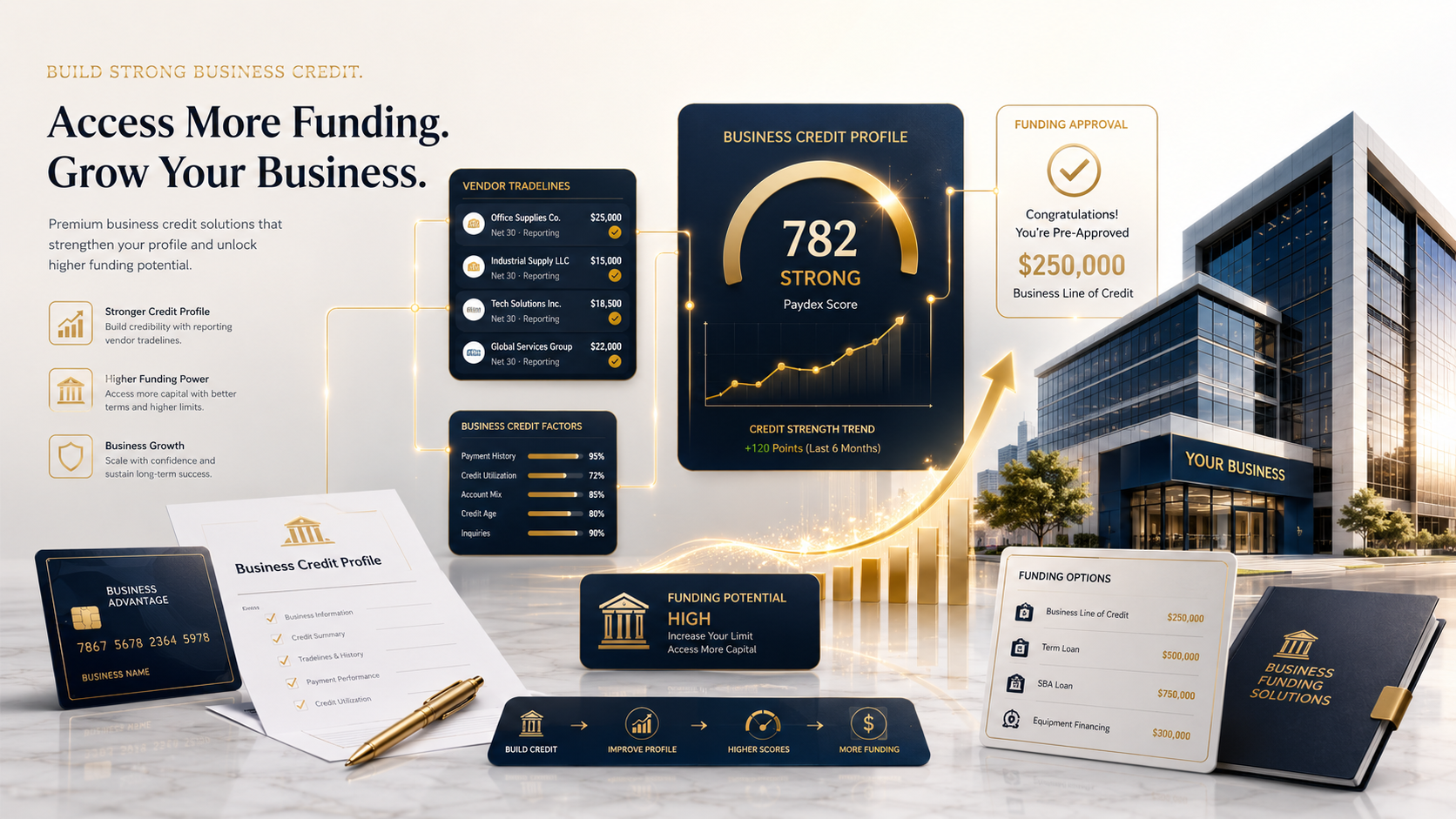
Fixing your personal credit does not have to be a waiting game with nothing else happening. While you work on improving your personal score, you can simultaneously build your business credit profile so that both are stronger when you apply.
One of the first steps you will want to take is to register for a Dun & Bradstreet number, or DUNS number. This is free and establishes your business credit file with Dun & Bradstreet, which is one of the primary commercial credit bureaus lenders check. From there, opening vendor trade lines that report to commercial bureaus and paying them consistently builds a business payment history that operates independently of your personal record.
The real advantage of doing both at the same time is that by the time your personal credit reaches your target threshold, your business profile is not starting from zero. You are presenting lenders with a stronger picture on both fronts simultaneously.
Setting a Realistic Target — Not a Perfect Score
Here is something worth saying plainly: you do not need to reach 800 before you apply. You need to reach the threshold for the programs you are actually targeting.
If you want an SBA 7(a) loan, your realistic goal is 650 to 680. If you are targeting a traditional bank term loan, 700 gets you competitive options. If you are working toward an alternative lender as a bridge while you build, 580 to 600 may already qualify you, though at a higher rate. Knowing your target turns credit improvement from an abstract goal into a specific, measurable milestone you can work toward with a clear timeline.
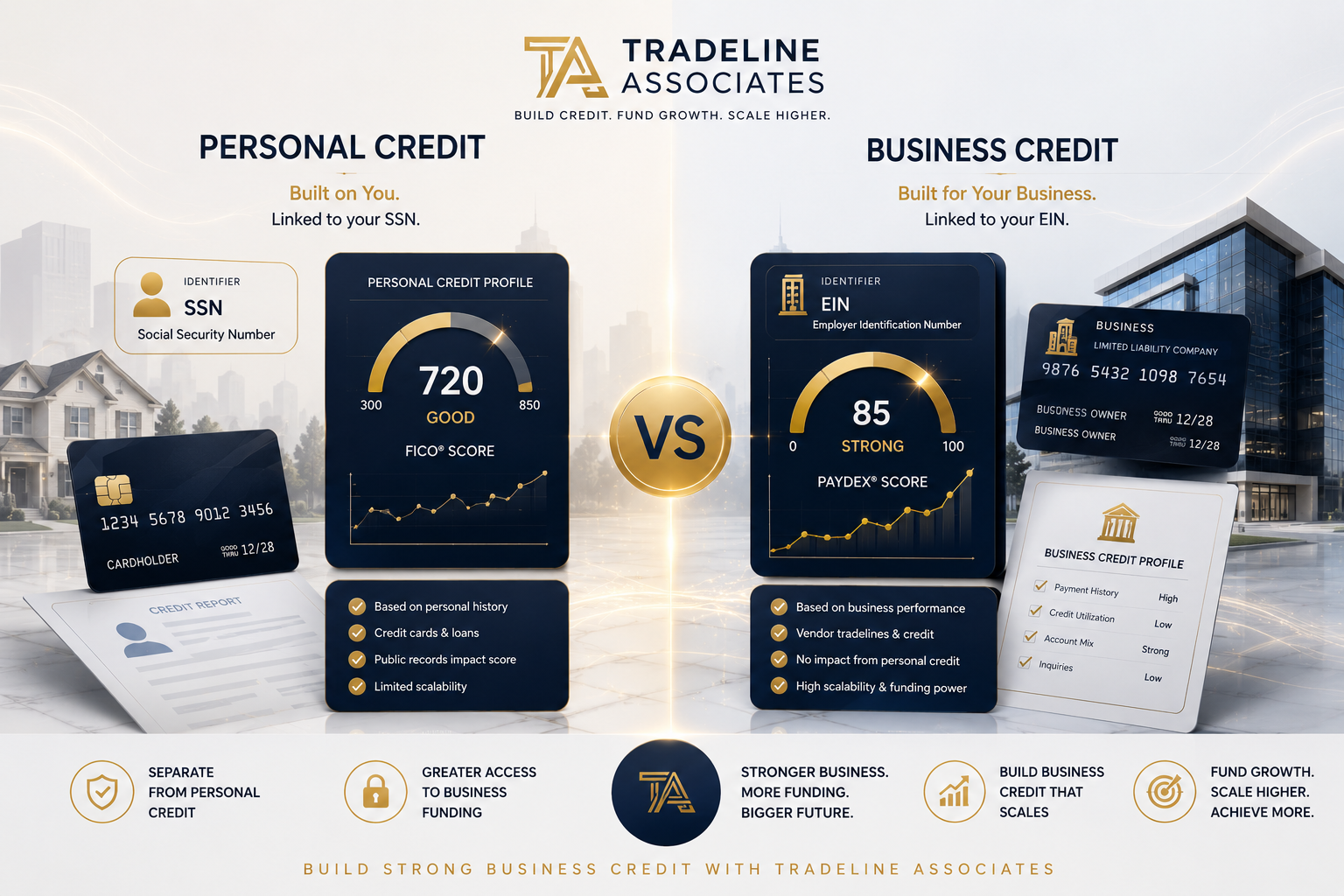
Personal vs. Business Credit: A Quick Comparison
| Factor | Personal Credit | Business Credit |
|---|---|---|
| Tied to | Social Security Number | EIN (Employer Identification Number) |
| Reported by | Experian, Equifax, TransUnion | Dun & Bradstreet, Experian Business, Equifax Business |
| Score range | 300–850 (FICO) | 0–100 (PAYDEX), varies by bureau |
| Used when | Always for new/small businesses | More weight as business matures |
| Improves fastest with | Paying down utilization, disputing errors | Vendor trade lines, on-time vendor payments |
Frequently Asked Questions
Q: Does my personal credit score affect all types of business loans? Yes, for most traditional banks, SBA loans, and many online lenders, personal credit is checked, especially when the business is newer. Alternative lenders and revenue-based financing programs weigh it less, though higher scores still improve your terms and approval odds.
Q: How long does it take to improve a personal credit score for a business loan? Utilization improvements can show within 30–60 days. Disputing errors resolves in as little as 30 days. More serious items like late payments and collections take longer to age off — typically several months to years for a meaningful shift.
Q: Can I get a business loan with a 600 credit score? Yes, but your options are limited to alternative lenders and short-term products at higher interest rates. Working toward 650+ opens access to SBA-backed programs and significantly better terms before applying.
Q: Will applying for business funding hurt my personal credit score? A hard inquiry from a lender application will temporarily lower your score. Many lenders offer pre-qualification using a soft pull, which has no impact — always ask for this option first before committing to a full application.
Q: Should I fix personal credit before building business credit, or do both together? Do both at the same time. Fixing personal credit takes months, and building a business credit profile also takes time. Starting simultaneously means you are not waiting twice — you are ready on both fronts when your personal score hits its target.
The Bottom Line
Personal credit business funding approval is not a hurdle you can bypass by forming an LLC or getting an EIN. Until your business has a meaningful commercial credit history of its own, lenders will continue to lean on your personal score to make their decision. The earlier you understand this and act on it, the more options you will have — and the less you will pay for the capital you access.
Pull your reports today. Identify the gaps. Set a realistic score target based on the programs you want to qualify for. And start building your business credit profile at the same time, so that when you are ready to apply, you are not just hitting the minimum — you are walking in with a story that makes lenders want to say yes.