
New Business vs Shelf Company Funding: The Race Most Entrepreneurs Lose Before It Starts

You have the credit score, the bank account, and a business plan that makes sense on paper. But the moment you apply for a business loan, the lender runs one check that stops everything — how long your business entity has legally existed. This is where the debate of new business vs shelf company funding becomes very practical and very expensive if you choose the wrong path.
This article walks through exactly how lenders evaluate both types of entities, what the numbers look like side by side, and the risks that most sellers of shelf companies quietly skip over.
How Business Lenders Actually Screen Applications
Most people assume a loan application is evaluated as a whole package from the start. In reality, lenders run a series of eligibility checks before a human underwriter ever opens the file. Time in business is typically one of the first automated filters, and it is binary. You pass, or you do not.
The formation date used in this check comes directly from your state’s Secretary of State records. It is not the date you started generating revenue, hired your first employee, or began taking the business seriously. It is the date the entity was legally registered, nothing else.
Here is how common funding programs set their minimum time in business thresholds:
| Funding Program | Minimum Time in Business |
|---|---|
| SBA 7(a) Loans (lender standard) | 2 years |
| Conventional Bank Business Loans | 1–2 years |
| Business Lines of Credit | 1–2 years |
| Business Credit Cards (best terms) | 2 years |
| Alternative / Online Lenders | 6–12 months |
Many lenders require a minimum of two years in business to qualify for an SBA loan, and the longer a business has been operating, the more likely it is to get approved. If your entity does not clear this threshold, the rest of your application, credit score, bank statements, and financial projections typically never get reviewed.
The New Business Side of the Equation
Registering a brand-new LLC or corporation today means your formation date is today. Your commercial credit history is zero. Your time in business is zero. Everything starts from scratch.
What New Business Owners Run Into
A new business owner can have a 720 personal credit score, a healthy business bank account, vendor relationships, and real monthly revenue, and still receive an automatic decline from most traditional loan programs because the entity is under a year old. The time-in-business filter does not account for the owner’s readiness or the strength of the financials. It is a hard cutoff.
This creates a painful situation where the work you put into your credit profile, your banking relationships, and your vendor accounts is essentially locked behind a gate that will not open for one to two years. Your preparation is real. Your access to traditional business funding at the early-stage is severely limited.
What New Businesses Can Access
This does not mean new businesses have zero options. Alternative and online lenders typically have more flexible requirements, with some programs requiring as little as six months in business and a monthly revenue of $10,000 or more. However, these programs generally come with higher interest rates and shorter repayment terms compared to conventional bank loans or SBA products.
The Shelf Company Side of the Equation
A shelf company, also called a shelf corporation, is a business entity that was legally registered in the past, maintained in good standing, and never used for actual operations. When transferred to a new owner, the original formation date carries over in state records. That date is what lenders check.
How a Shelf Company Changes the Funding Conversation
In the context of new business vs shelf company funding, the shelf company’s primary advantage is straightforward: it clears the time in the business gate. When a lender runs the formation date check, the entity passes. The application moves into actual underwriting review instead of being stopped before anyone opens the file.
Some lenders prefer companies with operational timelines exceeding two years, and an entity with an established registration date may appear more trustworthy to vendors, lenders, and financial institutions. That perception advantage is what shelf company buyers are paying for.
What a Shelf Company Does Not Solve
Clearing the time in the business check is the first gate, not the only gate. After acquiring a shelf company, you still need a complete funding profile built around it:
- Personal credit score: Most traditional lenders and SBA programs want to see a score of at least 670 to 690. If your credit score is not above 690, you will likely have difficulty qualifying for an SBA loan.
- Business bank account activity: Three to six months of consistent deposits and healthy average balances signal operational legitimacy. A dormant account attached to an aged entity raises flags rather than confidence.
- Commercial credit tradelines: Accounts reporting to Dun & Bradstreet, Experian Business, or Equifax Business matter. An entity with no reporting activity gets treated as a blank slate by credit bureaus regardless of its formation date.
- Tax returns and financials: Most SBA lenders want to see business tax returns for the past two to three years, along with current profit and loss statements and balance sheets.
- EIN and compliance documentation: A clean EIN, current registered agent, up-to-date annual filings, and a verifiable business address all factor into lender confidence.
Side-by-Side Comparison: The Same Application, Two Outcomes
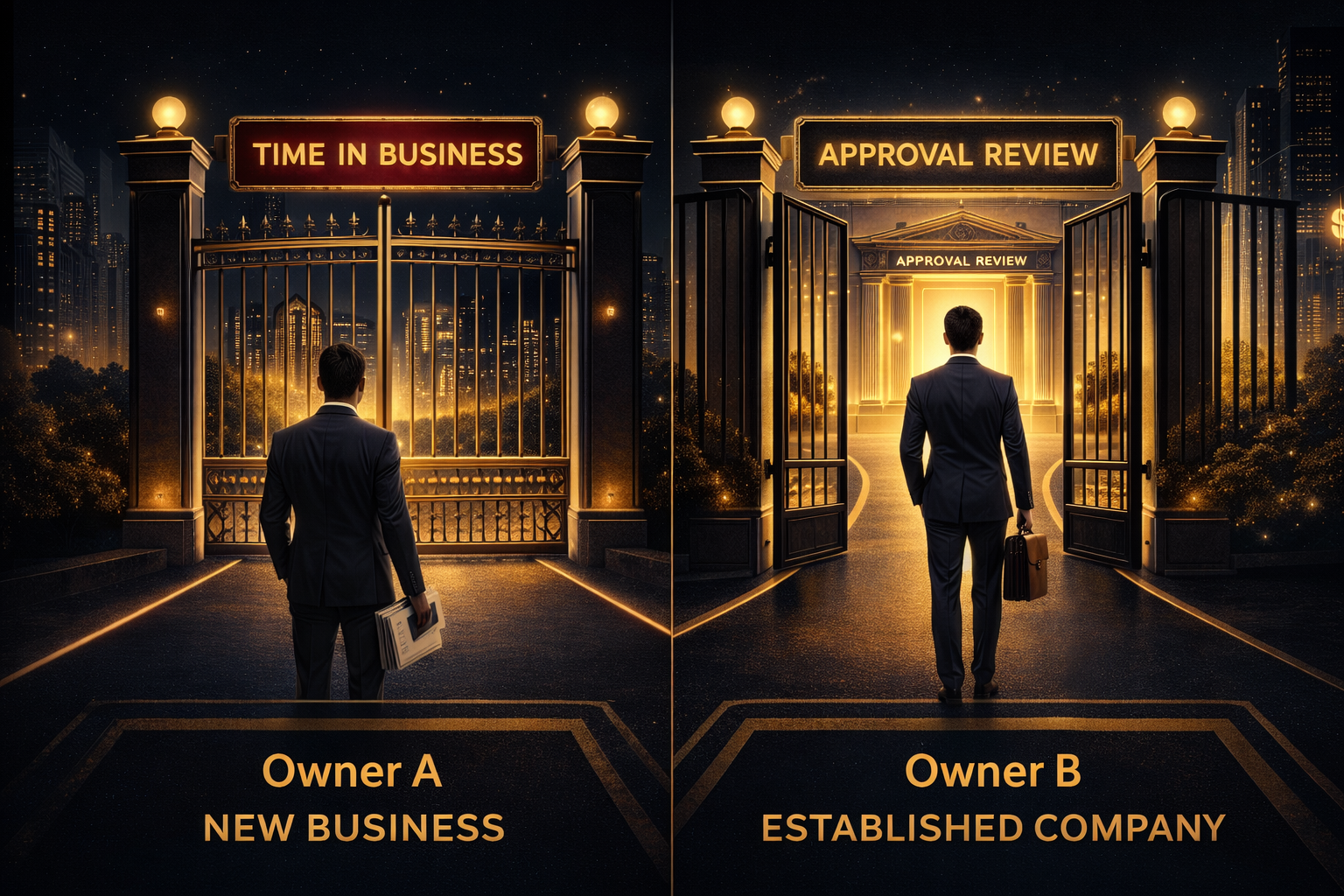
Two business owners apply on the same day for a $60,000 business line of credit. The program requires two years in business. Both have a 695 personal credit score, six months of business banking history, and two vendor tradelines reporting to Dun & Bradstreet.
Owner A registered a new LLC 10 months ago. The application is automatically declined at the time of the business check. The underwriter never sees the rest of the file.
Owner B transferred a clean shelf corporation formed three years ago. The application moves into full underwriting review. The outcome depends on the strength of everything else in the profile, but there is an outcome to work toward.
That is the entire race. One application gets to run it. The other does not even reach the starting line.
Risks That Shelf Company Sellers Rarely Advertise
This section exists because balance matters more than a sales pitch. Shelf corporations are legal and used legitimately, but the risks are real and worth understanding before you spend money.
AI Underwriting Is Catching Up
Modern lenders increasingly use automated underwriting systems that look for patterns beyond the formation date. AI underwriting systems now flag businesses with inactivity gaps or no UCC filings. A company formed seven years ago that just started operating last month can trigger fraud detection rather than build confidence. Age without supporting financial activity does not always produce the result buyers expect.
Credit Bureaus Can Reset Your Entity Age
If a business credit bureau gets wind that a company suddenly has new officers in a pattern consistent with a shelf corporation, the age of the company may be reset to zero on your business credit profile. Lenders may also deny applications or shut down existing lines of credit if they become suspicious. This is not a theoretical risk — it is a documented outcome.
The Legal Line Is Clear
Shelf corporations are legal as long as they are used ethically. They become illegal if you commit fraud — such as lying to lenders about the business’s actual operational age, hiding liabilities, or using them for tax evasion. The entity’s formation date is a matter of verifiable public record. Using a legitimately formed shelf company is legal. Misrepresenting operational history to a lender is not.
Verify Before You Buy
Always verify independently through the Secretary of State website that the formation date matches what is being sold. Confirm there are no prior UCC filings, outstanding liens, prior debt, or ownership history that creates complications during underwriting. A shelf company that is not genuinely clean can create more problems than a new entity.
What Actually Gets You Funded: A Practical Sequence
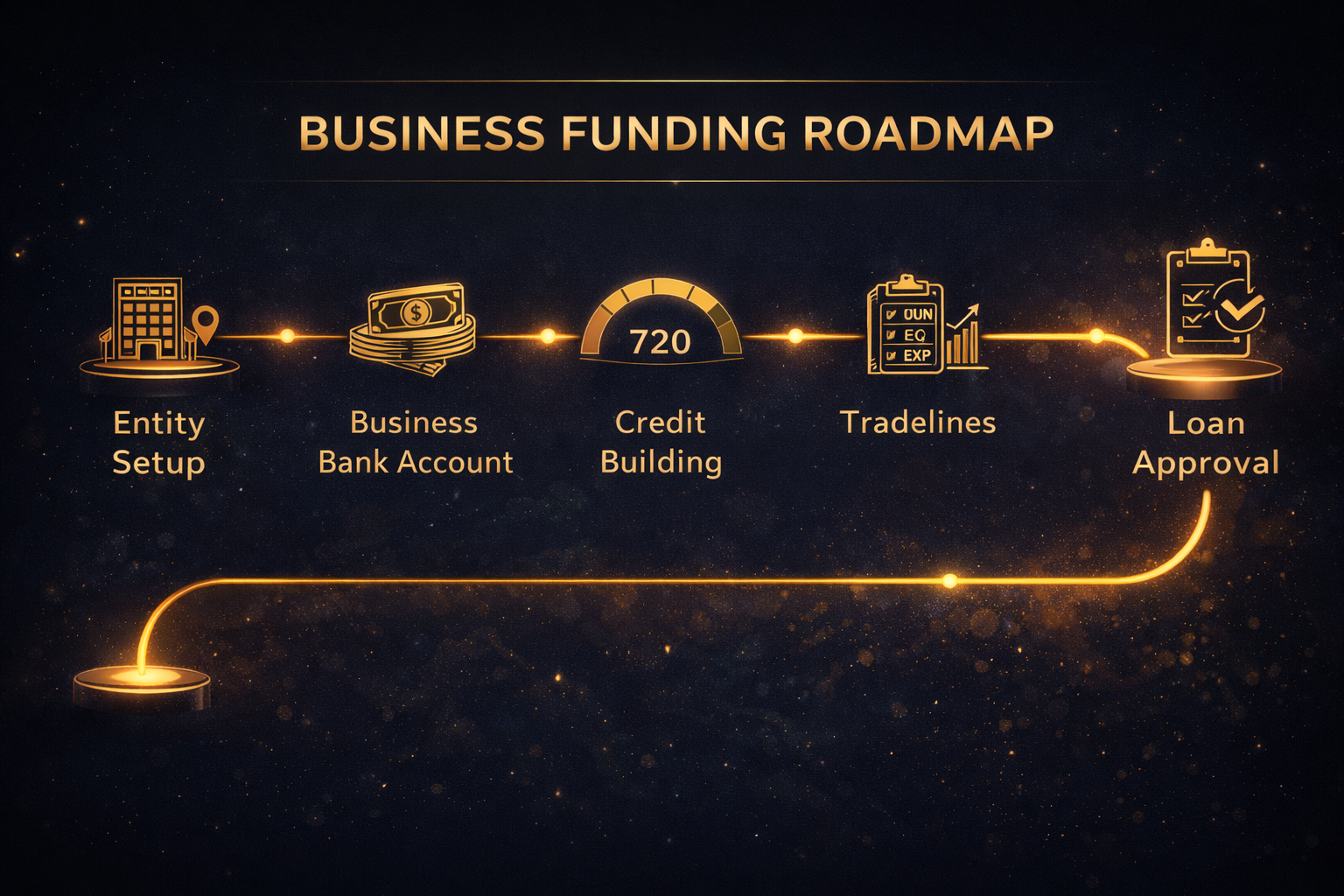
Whether you go with a new business or a shelf company, the funding preparation work is the same. The difference is when you become eligible to put that work to use.
- Establish your entity, new or transferred shelf company, with proper compliance: registered agent, EIN, business address, and current annual filings.
- Open a dedicated business bank account and build three to six months of consistent transaction history with healthy average balances.
- Establish vendor tradelines that report to commercial credit bureaus, Dun & Bradstreet, Experian Business, and Equifax Business.
- Monitor your Paydex score through D&B and your Experian Business IntelliScore regularly.
- Keep your personal credit above 670 and resolve any derogatory marks before applying.
- Apply for funding programs that match your full profile, not just your entity age.
The U.S. Small Business Administration’s loan resource center provides a solid foundation for understanding what lenders evaluate and which programs may fit your stage of business.
The Cost Comparison Done Honestly
Registering a new LLC typically costs between $50 and $500 in state filing fees. Acquiring a quality shelf company typically costs $1,000 to several thousand dollars, depending on the entity’s age and what is included in the package.
The relevant comparison is not between those two numbers. It is between immediate eligibility for traditional funding programs versus waiting one to two years before most of those programs will review your application at all. For a business that needs $50,000 to $150,000 in capital to grow or launch, the cost of the waiting period includes everything not built during those years.
That said, buying a shelf company before your personal credit, banking history, and commercial tradelines are ready does not accelerate your funding timeline; it just changes which obstacle you hit first.
Frequently Asked Questions
Does a shelf company guarantee faster business loan approval?
No. It helps clear the time in business requirements, but lenders also evaluate personal credit, business bank history, commercial tradelines, and financial documents. All needs to be for approval.
How do lenders verify a business’s formation date?
They check directly with the Secretary of State in the state of incorporation. This is a public record that any lender or credit bureau can access and verify independently.
Can a credit bureau reset a shelf company’s age after transfer?
Yes. If a bureau detects patterns consistent with shelf corporation use, it may reset the entity’s age to zero in its own records, which affects your commercial credit profile even if state records remain unchanged.
What makes a shelf company safe to use for funding purposes? Zero prior operating history, no open accounts, no liens, no UCC filings, no prior debt, maintained in good standing since formation, and a new EIN issued after transfer with no prior tax history attached.
Is it better to build a new business or buy a shelf company?
It depends on your timeline and readiness. If your personal credit and financial profile are already strong and you need access to traditional funding now, a clean shelf company can remove the time barrier. If those fundamentals are not in place yet, either path leads to the same delay.