
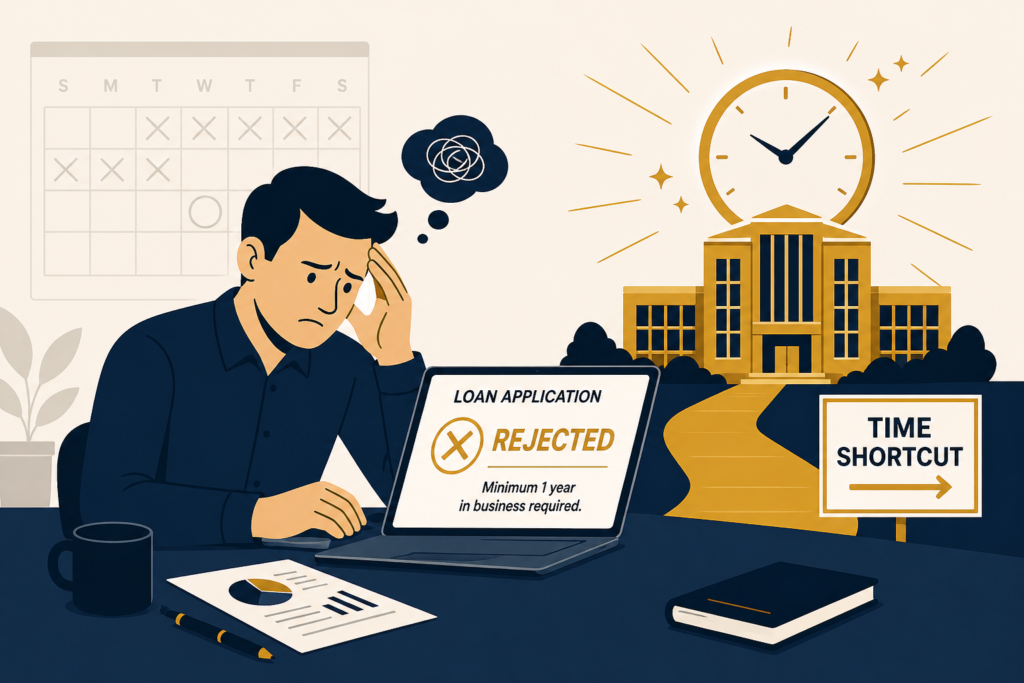
You did everything right. You have a real business idea, a solid plan, and you are genuinely ready to grow. Then the lender’s rejection lands in your inbox, and buried in the fine print is the reason: a minimum of one year in business is required.
Not bad credit. Not missing documents. Just the fact that your business entity has not existed long enough on paper. And for most business owners, the only response they know is to wait, sometimes a year, sometimes two. Opportunities dry up. Competitors move forward. You sit on the sidelines.
But there is a way to legally skip time in business requirements without misrepresenting anything. It is called a clean-aged corporation, and when used correctly, it is one of the most practical and legitimate tools available to business owners who need to move faster than the calendar allows.
This article explains exactly how it works, why lenders use these age thresholds in the first place, what you still need to build after the transfer, and how to avoid the mistakes that can turn a smart strategy into a costly one.
Why Time in Business Requirements Exist
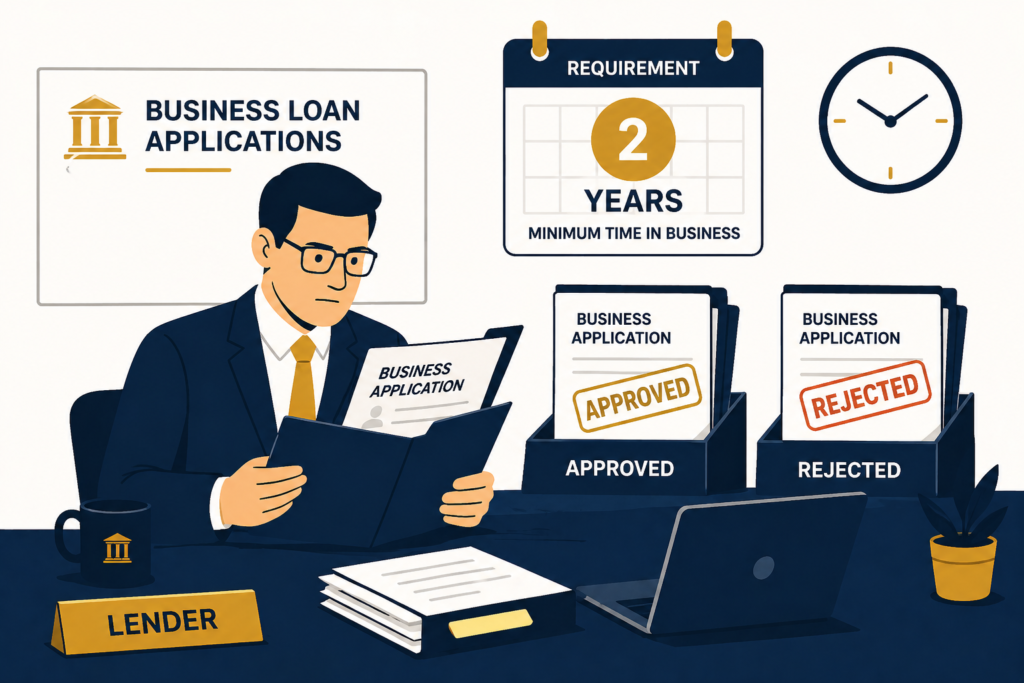
Lenders use time in business as a shortcut for measuring risk. The logic behind it is straightforward: a business that has survived two years has proven something. It has weathered slow months, operational hiccups, and market shifts. A brand-new entity has not proven anything yet, at least not in the statistical sense that lenders care about.
The U.S. Bureau of Labor Statistics consistently shows that roughly 20 percent of new businesses fail in their first year, and about half do not survive past five years. Lenders know these figures well. Setting a minimum time-in-business threshold is their way of filtering out the highest-risk segment of applicants before spending resources on a full review.
Most standard business loan programs require at least 1 year in operation. SBA loans and larger lines of credit typically require two years or more. According to recent data from Crestmont Capital’s 2026 lending research, approximately 26% of denied loan applicants cite “too new in business” as a reason for rejection, making it one of the top five most common causes of denial.
The Problem with Time in Business as a Metric
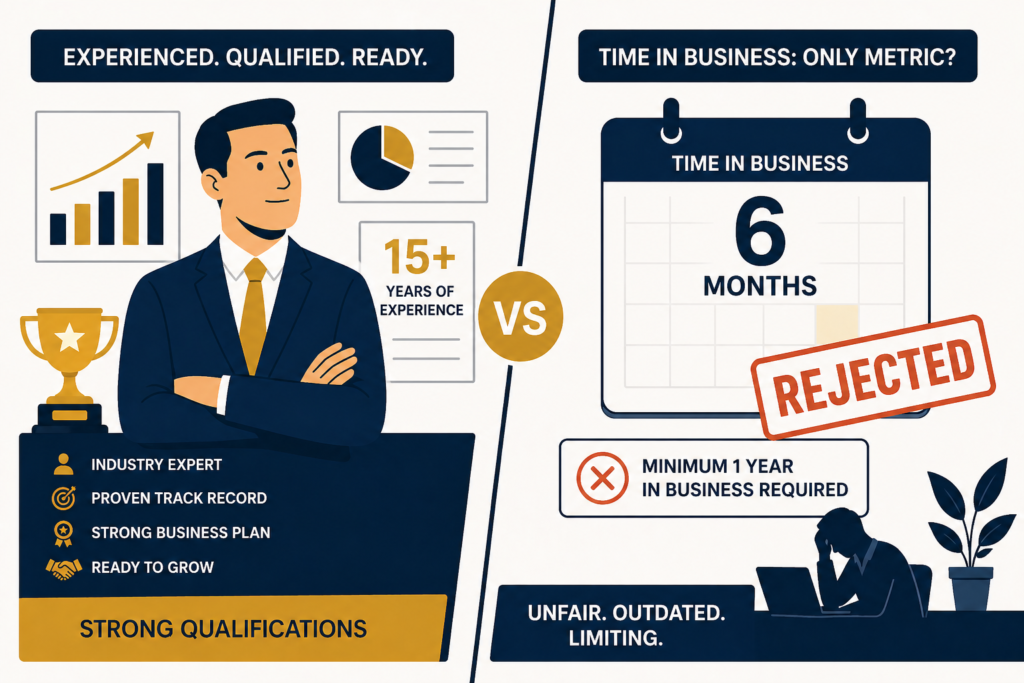
Here is the honest frustration: time in business does not measure your experience, your business plan’s viability, your revenue potential, or your personal history as an entrepreneur. It only measures how long the legal entity has existed on paper. A highly qualified founder with 15 years of industry experience who registered a new LLC six months ago will fail this filter just as certainly as someone with no experience at all.
That is why skipping the time in business requirements through a clean aged corporation is not a deceptive workaround; it is a direct response to a blunt instrument that does not measure what it claims to measure.
Why Business Loan Applications Really Get Denied: A Data View
Before exploring the solution, it helps to understand the full landscape of rejection. The following table breaks down the most common denial reasons and clarifies which ones an aged corporation can actually solve.
| Rejection Reason | % of Denied Applicants | Can Aged Corp Solve It? |
| Too new in business (< 1–2 yrs) | ~26% | Yes, directly |
| Insufficient credit history / low score | ~50% | Partially, still need to build |
| Insufficient collateral | ~44% | No, must address separately |
| Too much existing debt | ~38% | No, must address separately |
| Insufficient revenue | ~33% | No, must address separately |
Key insight: An aged corporation directly solves the time in business problem. It does not solve credit, collateral, or revenue problems; those require separate, deliberate action. Anyone who tells you differently is not being honest with you.
What a Clean Aged Corporation Actually Does
A clean aged corporation, also called a shelf corporation or aged shelf company, is a business entity that was legally formed years ago, maintained in good standing with no activity, and then transferred to a new owner. When you acquire one, you step into the legal history of that entity. Its formation date becomes your business’s formation date.
You are not forging documents. You are not manufacturing fake history. The formation date is real, registered with the state, and verifiable through public records. When any business is bought and sold, which happens every day, the new owner inherits the entity’s corporate history. An aged shelf corporation works on the same legal principle. The difference is that the history consists only of the formation date, not prior business activity.
How This Satisfies the Lender’s First Filter
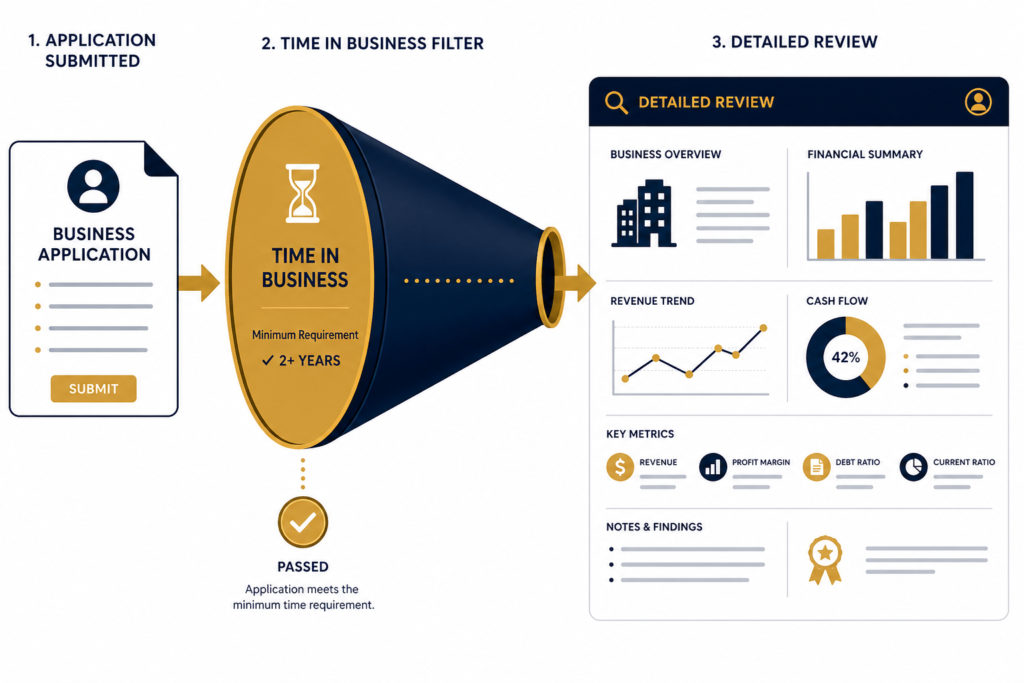
Most lenders verify time in business by checking the business entity’s formation date with the state, not by asking how long you personally have owned it. When they pull records on a three-year-old corporation, they see a three-year-old corporation. Your application clears the age threshold. It moves from the rejection pile into the actual review queue, where your real qualifications, credit, revenue, and banking history finally get evaluated.
That shift is significant. Before acquiring an aged corporation, your application is invisible to underwriters. After the transfer, it is in the room. Whether it gets approved depends on everything else, but at least everything else now has a chance to count.
A Real Scenario: The Same Sixty Days, Two Completely Different Outcomes
Consider two entrepreneurs, call them Priya and Daniel, who both launch consulting businesses on the same day. Priya registers a new LLC. Daniel transfers a five-year-old clean aged corporation from a verified provider. The process takes 36 hours. Sixty days later: Priya is still waiting for the 12-month clock to tick. She cannot apply for most business credit. Her applications are rejected at the first filter before anyone reads her financials. Daniel has opened a business bank account, registered his DUNS number with Dun & Bradstreet, applied for net-30 vendor accounts, and submitted his first application for a business line of credit. His application gets a full review. Same sixty days. Same level of qualifications. Completely different positions in the funding process.
Priya’s situation is not a failure of effort or merit. It is a timing problem, one that a clean aged corporation was specifically designed to solve.
The Timeline Difference: New Entity vs. Aged Corporation
The table below shows how dramatically the funding timeline changes when you skip the time in the business waiting period:
| Milestone | New LLC (Starting Today) | Aged Corporation (Starting Today) |
| Entity formation | Day 1 | Day 1 (transfer complete in 24–48 hrs) |
| Meets 1-yr lender threshold | Month 12 | Immediately |
| Meets 2-yr lender threshold | Month 24 | Immediately (if corp is 2+ yrs old) |
| Can apply for most business credit | Month 12–24 | Week 1–4 (after profile setup) |
| First business credit line possible | Month 14–26 | Month 2–4 |
| Eligible for most bank products | Month 24+ | Month 2–6 |
Note: Individual results depend on personal credit strength, industry, and how quickly the business credit profile is built after the transfer. These timelines represent realistic outcomes for applicants with strong personal credit and well-documented business profiles.
What a Clean Aged Corporation Does NOT Do
This is where honest guidance matters most. An aged corporation that helps you skip the time in business requirements is a real and powerful tool, but it is not a magic wand. Here is exactly what it does not solve:
- It does not fix your personal credit score. Most lenders, especially for amounts under $150,000, still run a personal credit check. A score below 600 will create significant friction even with a five-year-old entity. Work on personal credit in parallel.
- It does not create instant business credit. The aged corporation arrives as a blank slate financially. No Paydex score. No Experian Business rating. No existing trade lines. You build all of that from scratch after the transfer. The advantage is that you are building it as an “established” entity rather than a startup.
- It does not generate revenue. If lenders want to see bank statements or revenue documentation, you need real activity and real numbers. The aged corp gets your application into review; your financials determine the outcome.
- It does not protect you if it is not clean. A corporation with prior activity, tax liens, or outstanding liabilities transfers those problems to you. Buying from an unvetted provider is one of the most dangerous mistakes in this space. Always verify the entity’s state records and obtain a Certificate of Good Standing before completing any transfer.
What You Need to Build After the Transfer
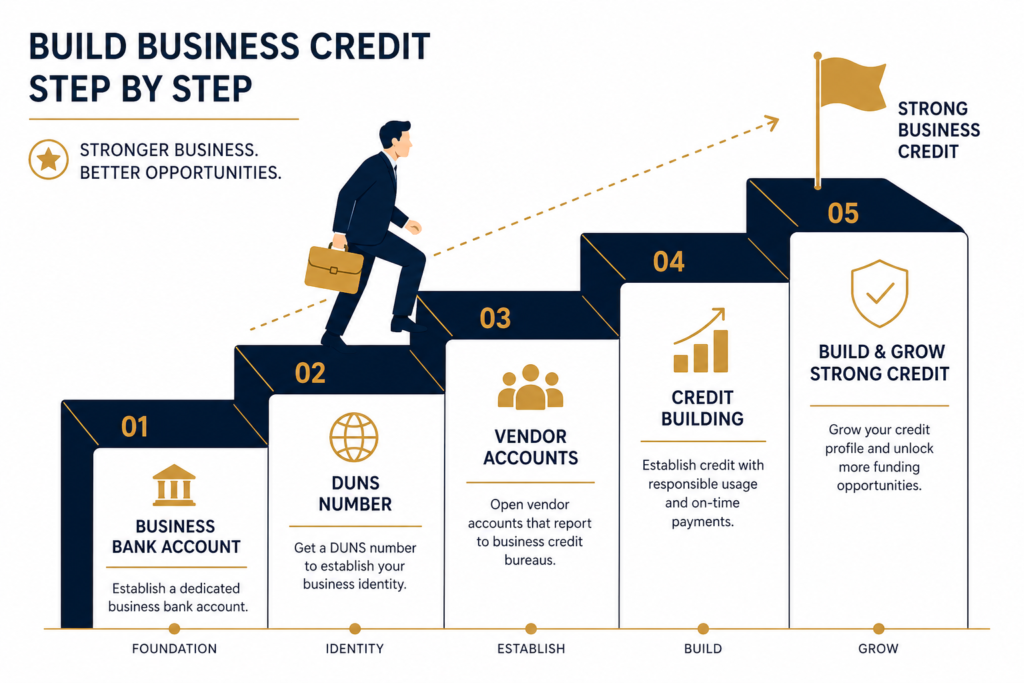
Transferring a clean aged corporation handles the time in the business gate. Everything beyond that gate requires active work. Here is the step-by-step sequence that maximizes your chances of funding approval after the transfer is complete:
| Action Step | Timeline | Why It Matters |
| Open a dedicated business bank account | Week 1 | Lenders verify 3–6 months of bank statements |
| Register your DUNS number with D&B | Week 1–2 | Foundation of your commercial credit profile |
| Set up complete business identity (address, phone, EIN, website) | Week 1–2 | Lenders verify legitimacy through public records |
| Apply for net-30 vendor accounts | Week 2–4 | Builds Paydex score; first tradelines on record |
| Apply for a secured business credit card | Month 1–2 | Establishes revolving credit history |
| Monitor business credit reports (D&B, Experian, Equifax) | Ongoing | Catch errors early; track score progress |
| Apply for business credit lines or loans | Month 2–6 | Full application review is now possible |
Building Your Paydex Score: The Foundation of Business Credit
Your Paydex score, Dun & Bradstreet’s business credit rating, is one of the first things commercial lenders check. It ranges from 1 to 100, and a score of 80 or above indicates that you pay your bills on time. Here is how you build it:
- Apply for starter vendor accounts with suppliers who report to D&B. Companies in office supplies, shipping, and business services often offer net-30 terms without a personal guarantee. Order small amounts and pay early; this builds positive payment history fast.
- Open a dedicated business bank account immediately after the transfer. Lenders look for 60 to 90 days of consistent banking activity. Do not mix personal and business finances; this undermines both your credit profile and your legal protection as a corporation.
- Apply for a secured business credit card once you have 2 to 3 vendor tradelines reporting. This adds a revolving credit dimension to your profile, which most lenders want to see alongside vendor credit.
- Register with all three commercial bureaus, Dun & Bradstreet, Experian Business, and Equifax Business. Errors and gaps on commercial credit reports are more common than most people realize. Monitor them monthly, especially in the first six months.
Is Using an Aged Corporation Legal? The Honest Answer
Yes, with one important condition. Purchasing and transferring a business entity is entirely legal and happens routinely in the business world. Businesses are bought and sold every day. When a new owner steps into an existing corporation, they inherit its corporate history. That is standard, recognized law in every U.S. state.
The legal line is crossed when an aged corporation is used to actively misrepresent your operational history to a lender, claiming years of revenue, activity, or business track record that do not exist. That constitutes loan fraud, which is a federal crime. Using an aged corporation to satisfy a time-in-business threshold, while being fully transparent about your actual operational history, is legal and legitimate.
The rule of thumb: You are using the entity’s legal formation date to your advantage, not fabricating its operational history. Those are fundamentally different things. Be transparent with your lender about the ownership transfer if asked directly. Reputable providers structure the transfer to ensure full legal compliance and documentation.
How to Choose a Reputable Aged Corporation Provider
The quality of the provider is the single most important factor in this strategy. A clean, properly maintained aged corporation from a reputable source is a genuine asset. A dirty or poorly documented one can create legal and financial complications that are worse than starting from scratch.
What Every Reputable Provider Should Offer
- Certificate of Good Standing from the state of formation.
- Full formation history and documentation, articles of incorporation, registered agent records, and any annual report filings since formation.
- Confirmation of zero prior activity, no transactions, no bank accounts, no tax returns filed, no liabilities, and no prior owners other than the original incorporators.
- A new EIN issued after the transfer ensures you have no exposure to any tax period from prior ownership.
- A professional provider can complete a clean transfer within 24 to 48 hours. Long delays or vague timelines are a warning sign.
Red Flags That Should Stop You Immediately
- Promises of pre-existing credit lines, a legitimate, aged corporation has no credit history.
- Tax returns or financial statements, a truly dormant corporation has no financial history.
- Pressure to act quickly or skip due diligence, reputable providers welcome document review. If a seller discourages you from verifying state records or rushes the process, walk away.
- Inability to name the state of formation or provide public record links, every legitimate corporation is on file with a state’s Secretary of State office.
Who Should Use This Strategy
A clean-aged corporation makes the most sense for a specific type of business owner. It is not the right tool for everyone.
This strategy works well if you:
- Have a business that is less than one to two years old and have been specifically denied for time in business reasons. This is the exact problem the tool solves.
- Are launching a new venture and want to bypass the waiting period entirely, you start building credit and applying for funding from day one instead of month twelve.
- Have genuinely strong personal credit and real business qualifications, but cannot get them evaluated because the entity age filter keeps your application out of the review queue.
- Are you bidding on government contracts or large corporate clients that require a minimum business age? This is one of the most straightforward and widely accepted uses of aged corporations.
This strategy is not the right fit if you:
- Having poor personal credit and significant existing debt, the aged corporation clears the first gate, but these problems still block it at underwriting. Address credit issues first.
- Are you looking for a shortcut that requires no additional work? The business credit building, documentation, and profile setup still need to happen after the transfer.
- Cannot afford to lose the acquisition cost, prices range from a few hundred dollars for basic entities to several thousand for older, well-documented corporations. Budget accordingly.
Frequently Asked Questions
Can I skip the time-in-business requirement with an aged corporation?
Yes—lenders check the entity’s formation date, not ownership tenure. A clean-aged corporation helps you pass the age filter instantly.
How long does the transfer process take?
Typically, 24–48 hours with a reputable provider. Includes EIN setup, filings, and full documentation.
Do I need to tell lenders I acquired an aged corporation?
Not usually required, but always answer honestly if asked. Misrepresentation can be considered fraud.
Difference between a shelf corporation and a shell company?
A shelf corporation is a clean, aged entity for legitimacy. A shell company has no operations and can have negative connotations.
How much does a clean aged corporation cost?
Ranges from $500–$7,000+, depending on age, state, and documentation. Older entities cost more.
Will an aged corporation work for SBA loans?
Usually, no SBA loans require tax returns and financials. Best for credit lines, cards, and non-SBA funding.
What if the corporation has hidden liabilities?
Liabilities transfer to you, so due diligence is critical. Always verify records and get written confirmation.
Bottom Line: Waiting Is Optional
A clean aged corporation helps you bypass time-in-business barriers, but doesn’t guarantee funding.
It’s a head start, not a shortcut, use it to build strong credit and funding readiness fast.
Ready to explore which aged corporation fits your timeline? View Available Aged Corporations at Tradeline Associates or Read Our Guide to Business Credit Building to see your next steps.
Sources & Further Reading
- U.S. Bureau of Labor Statistics — Business Survival Rates
- Federal Reserve Small Business Credit Survey — 2025 Report
- Small Business Loan Statistics 2026 — Crestmont Capital
- Startup Business Loan Approval Statistics — Crestmont Capital
- Are Shelf Corporations Legitimate? — Nav Financial
- Business Loan Requirements 2026 — Bankable Funds