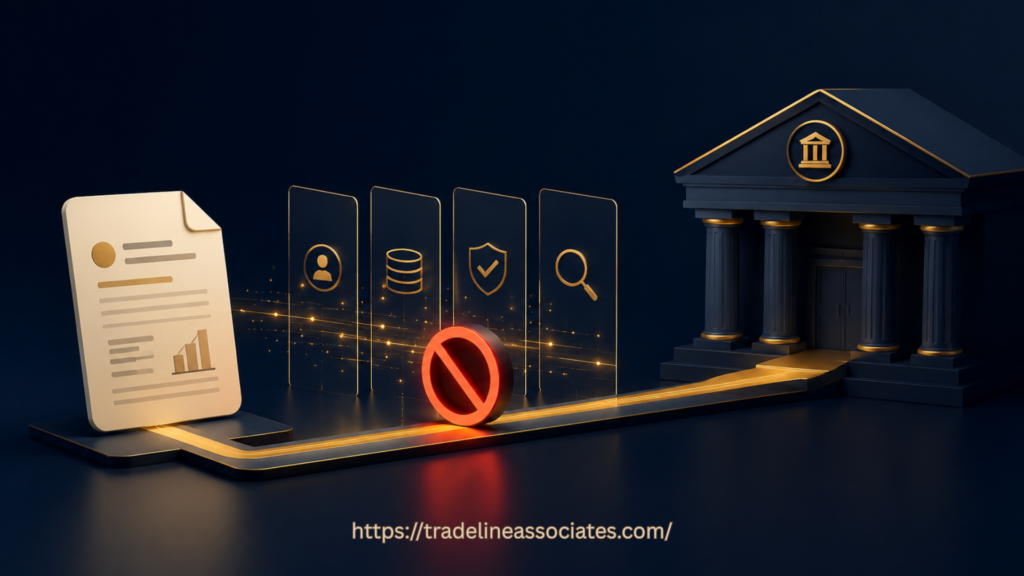
You did everything you were meant to do. You registered your business, got your EIN, opened a bank account, and started building. You applied for a loan and got denied. The letter was vague. You fixed your credit, tried again, and were put down again.
You’re not the only one who has heard this before. Bankrate reports that, according to the 2024 Report on Employer Firms, 22% of employer firms were denied business loans in the past year, and another 28% were only partially approved. Many of those owners never received a clear explanation of why.
The most common reasons for business loan denials are not what most people think. Yes, credit score matters. But lenders check a completely separate layer of your business profile before they ever pull your credit. When that layer has problems, your application fails invisibly, before a single human reads it.
This guide covers every major reason business loans get denied, the hidden compliance issues most people miss, and exactly what to fix before you apply again.
Business Loan Denied Reasons: The Full Data Breakdown
Before diving into each reason, it helps to see the full picture. The following table summarizes the most common business loan denied reasons with estimated denial percentages based on Federal Reserve SBCS data and lender surveys, alongside the fastest path to fixing each one:
| Denial Reason | % Denied* | Fixable? | Fastest Solution |
| Poor personal/business credit | ~45% | Yes | Credit repair + secured cards |
| Insufficient collateral | ~36% | Partial | Unsecured loans / SBA programs |
| Insufficient cash flow/revenue | ~33% | Partial | Show 3–6 months’ bank statements |
| Too short a time in business | ~26% | Yes | Clean aged shelf company transfer |
| Too much existing debt | ~22% | Yes | Pay down debt before applying |
| Incomplete documentation | ~18% | Yes | Business identity audit (see below) |
| High-risk industry classification | ~14% | Partial | Verify SIC/NAICS code accuracy |
*Percentages based on Federal Reserve 2025 Small Business Credit Survey data and Bankrate lender research. Multiple reasons may apply to a single denial.
The important insight: Most business owners focus entirely on personal credit after a denial. But as the table shows, credit score is only one of seven major reasons for denial, and it is not always the primary one. Fixing the wrong problem means more denials, more time wasted, and more damage to your confidence.
The Hidden Layer: What Lenders Check Before Your Credit Score
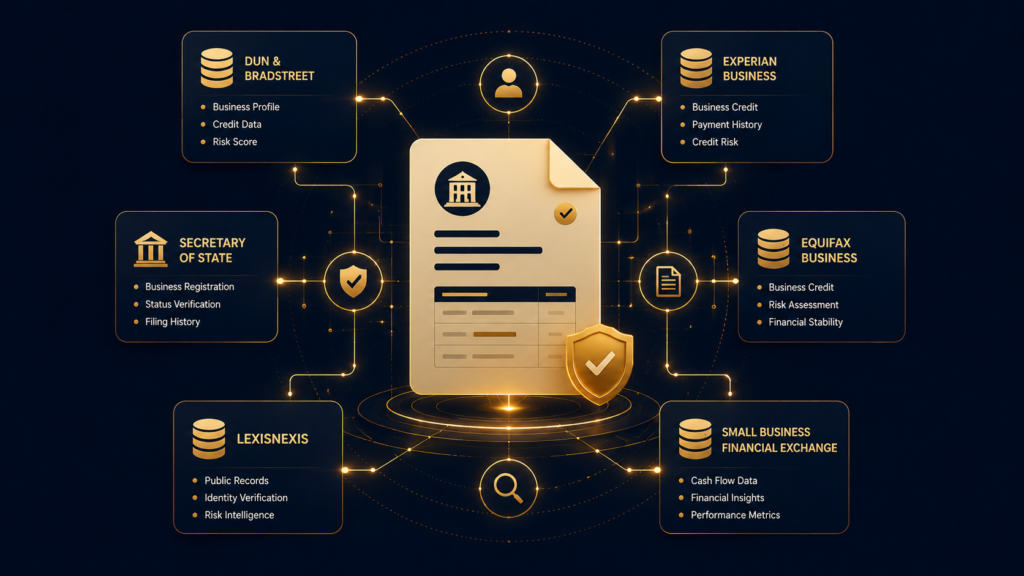
Here is what most business owners never find out: lenders do not jump straight to your credit score. Before underwriting begins, they run your business through an automated identity verification process, cross-referencing your information across multiple independent databases.
These databases include your Secretary of State filing, Dun & Bradstreet, Experian Business, Equifax Business, LexisNexis, and the Small Business Financial Exchange (SBFE). Each one holds different information about your business. When that information does not match across databases, even in minor ways, the system flags your application. In many cases, it is declined automatically before a human ever reads it.
This is why so many business owners feel confused after a denial. Their credit score is fine. Their revenue is real. But somewhere in their business profile, there is an inconsistency that the automated system flagged, and the denial letter says ‘did not meet our requirements.’
The 7 Real Business Loan Denied Reasons
1. Poor Credit Score — Personal and Business
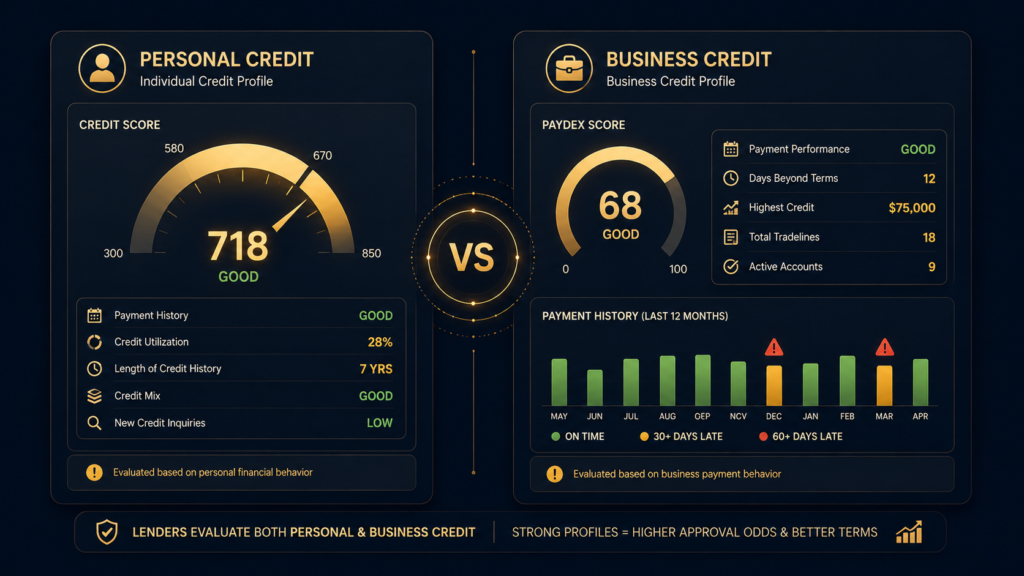
This is the most widely known denial reason, and it is real. Lenders use personal credit scores to evaluate the owner’s repayment history. Most traditional lenders want to see a personal credit score of 650 or above, with scores above 700 unlocking better rates and higher approval odds. Business credit scores, primarily your Paydex score with Dun & Bradstreet, are evaluated separately and reflect your company’s own payment history with vendors and creditors.
What surprises most applicants: lenders evaluate personal and business credit separately. A strong personal score does not compensate for an empty business credit profile. Both need to be in reasonable shape. If you have never built business credit, start with net-30 vendor accounts that report to commercial bureaus; this is how your Paydex score grows.
2. Insufficient Collateral
Many traditional lenders, especially banks, require collateral as security against the loan. This can include real estate, equipment, inventory, or business assets. If your business does not have enough pledged assets, many lenders will decline regardless of your credit profile. SBA loan programs partially address this through government guarantees, but they come with their own set of requirements, including two or more years of tax returns.
If collateral is your barrier, explore unsecured business lines of credit through alternative lenders, invoice financing, or revenue-based financing products. These have higher costs but lower asset requirements.
3. Insufficient Cash Flow or Revenue
Lenders want to see that your business generates enough cash to repay the debt. Most set minimum revenue thresholds between $100,000 and $250,000 annually, and they evaluate your cash flow using the debt service coverage ratio (DSCR). A DSCR below 1.25, meaning your income only barely covers your existing debt obligations, is typically enough to trigger a denial.
Your business bank statements are the primary evidence lenders use here. Inconsistent deposits, long periods of zero activity, or a chronically low average daily balance all signal insufficient cash flow, even when your actual revenue numbers look acceptable on paper.
4. Too Short a Time in Business
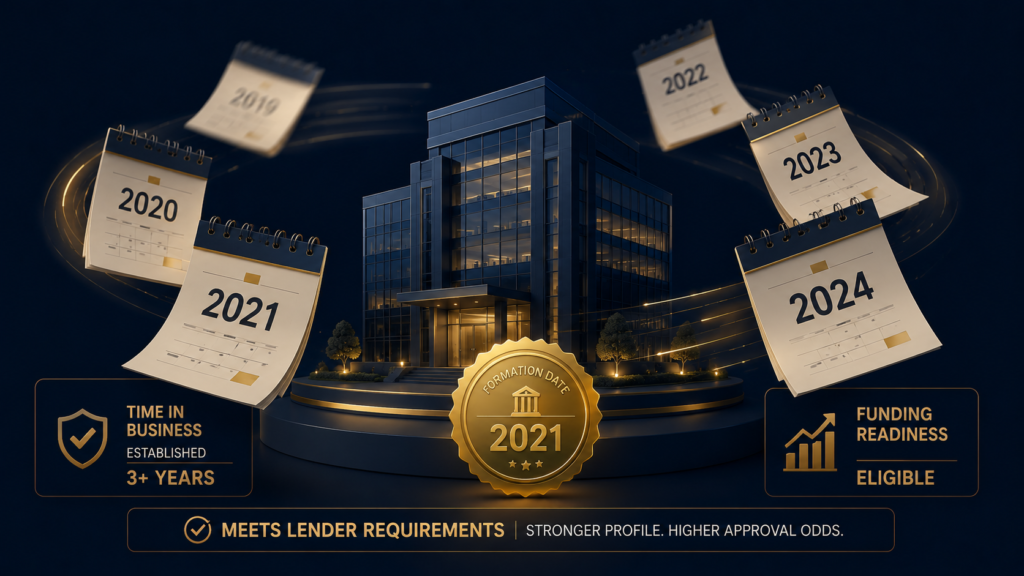
This is one of the most common business loan denied reasons and one of the most misunderstood. Most standard business loan programs require a minimum of one year in business. SBA loans and larger credit lines typically require two or more years. This is verified against your Secretary of State formation date, not when you started generating revenue or when you personally began working in the industry.
The frustrating part is that this filter happens before your credit score is ever reviewed. A business formed eight months ago is declined automatically, regardless of how strong everything else looks. Many business owners spend months improving their personal credit, while this problem goes completely unaddressed.
If time in business is your barrier, a clean-aged shelf company legally solves this by giving you a real, state-verified formation date that already meets lender thresholds.
Learn how this works in our guide: How Aged Shelf Companies Work for Business Funding.
5. Too Much Existing Debt
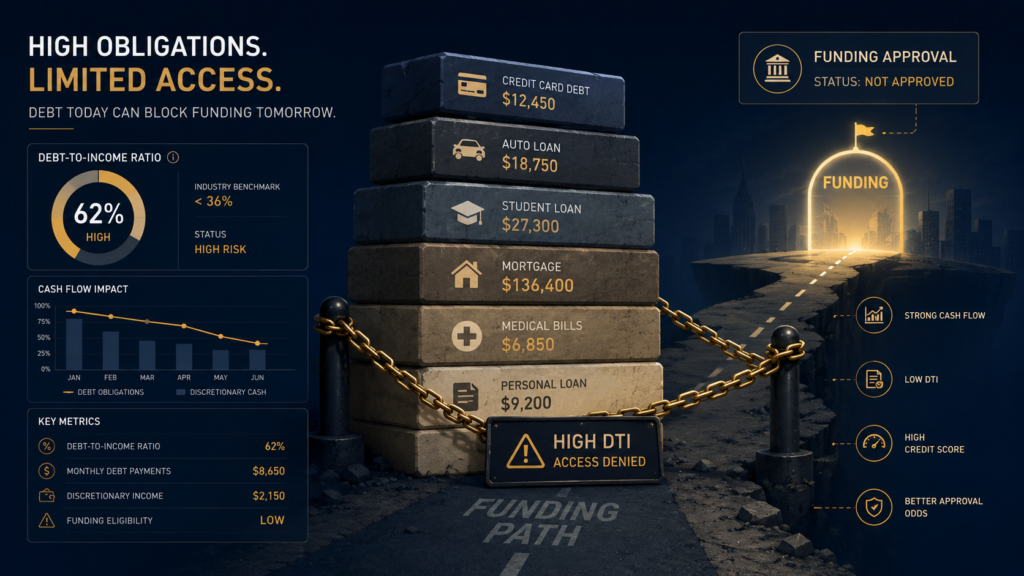
High existing debt, reflected in a high debt-to-income ratio, signals to lenders that your business is already over-leveraged. Adding another loan payment on top of existing obligations increases default risk. Lenders use metrics like DSCR and total debt exposure to make this determination.
If debt load is your issue, focus on paying down high-interest obligations before reapplying. Consolidating multiple debts into a single lower-rate instrument can also improve your ratio. Come back to the application when your debt service looks manageable relative to your income.
6. Incomplete or Inconsistent Documentation
This is where the hidden compliance layer we discussed earlier creates invisible denials. Your business identity needs to be consistent across every database a lender checks. A name spelled slightly differently in two places, an address that appears in state records but not your bank account, or a phone number that is not listed in any business directory, any of these inconsistencies triggers a verification failure that looks like a documentation problem on the denial letter.
According to America’s SBDC, incomplete or inconsistent records are among the top controllable reasons for business financing denial, and they are entirely fixable once you know where to look. The compliance audit checklist in the next section covers every item you need to verify.
7. High-Risk Industry Classification
Every business is assigned an SIC or NAICS code at registration. Certain codes are classified as high-risk by most traditional lenders, such as cannabis, adult entertainment, gambling, firearms, payday lending, and some transportation and hospitality subcategories. If your code falls in a restricted category, most lenders will decline your application automatically, regardless of your personal credit or revenue.
Many business owners end up in the wrong code by accident; they choose the closest-sounding option at registration without realizing the implications. Verify your exact code and cross-reference it against lender guidelines before your next application. Correcting a misclassified code is possible through state filings, though the process varies by state.
Business Identity Compliance Audit: Check These Before You Apply
Run through this checklist before your next application. Each item on this list is something lenders verify, and a failure on any one of them can be the real reason behind a denial you never fully understood:
| Compliance Factor | Pass / Fail | Risk If Wrong |
| The business name is identical across all databases | ✅ / ❌ | Fraud flag, auto denial |
| Physical address (no PO Box) on all filings | ✅ / ❌ | Rejected outright by many lenders |
| Address matches SoS, bank, D&B, directories | ✅ / ❌ | Manual review or automatic denial |
| Business phone listed in 411 / directories | ✅ / ❌ | Cannot verify the business exists |
| Professional domain email (not Gmail/Yahoo) | ✅ / ❌ | Signals informal/unestablished |
| DUNS number registered and active | ✅ / ❌ | No commercial credit profile, invisible |
| Business bank account active 90+ days | ✅ / ❌ | No banking history for underwriting |
| Formation date meets 1–2 year threshold | ✅ / ❌ | Auto-rejected before underwriting |
| SIC/NAICS code not in restricted category | ✅ / ❌ | Denied regardless of credit profile |
| Secretary of State filing in good standing | ✅ / ❌ | An entity may not be legally recognized |
How to use this checklist: Go through every row and check each item against your actual business records. Open your Secretary of State filing, your D&B profile, your bank account details, and your Google Business listing simultaneously. Every discrepancy you find is a potential denial reason and most can be corrected within days to weeks.
How to Fix Each Business Loan Denied Reason
Once you know which issue applies to you, here is the fastest path forward for each one:
- Credit score issues: Review your personal and business credit reports for errors, and dispute any inaccuracies immediately. Pay down revolving balances below 30% utilization. Apply for net-30 vendor accounts with suppliers that report to commercial bureaus to begin building your Paydex score. Give yourself 60 to 90 days of consistent positive payment activity before reapplying.
- Business identity inconsistencies: Correct any name or address mismatches in your Secretary of State filing, business bank account, and D&B profile. List your business phone number in 411 and major business directories through services like Yext or Whitepages Business. Switch to a professional domain email address. These fixes typically take one to three weeks to propagate across databases.
- Missing DUNS number: Register for free at Dun & Bradstreet’s website. The process takes a few business days. Once active, verify that the information in your D&B profile matches your current business details exactly. An outdated D&B profile creates the same friction as no profile at all.
- Time in business too short: If your entity is less than one to two years old and this is your primary denial reason, address it directly rather than waiting. A clean-aged shelf company legally satisfies the time-in-business threshold immediately by giving you a real, state-verified formation date. This is not a workaround; it is the same legal mechanism used in any business acquisition. See our guide: Aged Shelf Companies for Business Funding.
- High-risk industry code: Look up your exact SIC or NAICS code using your state’s Secretary of State portal or your original EIN confirmation letter. Cross-reference it against the lender and the SBA restricted industry lists. If your code is incorrect or in a flagged category, file a correction through your state’s business registration system and update all related filings.
Frequently Asked Questions About Business Loan Denied Reasons
Why did my business loan get denied with good credit?
A good personal credit score is important, but it is not the only factor lenders evaluate. If your business loan was denied despite strong personal credit, the most likely causes are: time in business too short (checked before credit in most systems), missing or inconsistent business identity (address mismatches, unlisted phone, no DUNS number), insufficient cash flow shown in bank statements, or an industry classification code that automatically disqualifies your business. Run through the compliance audit checklist above before reapplying.
How long should I wait before reapplying after a business loan denial?
The answer depends entirely on what caused the denial. If the issue was a fixable compliance problem, an address mismatch, a missing DUNS number, or an unlisted phone, you can correct it and reapply within four to six weeks. If the issue was credit score, you typically need three to six months of positive payment activity before a meaningful score improvement shows up. If the issue was time in business and you are using an aged shelf company to solve it, you can reapply within 60 to 90 days of transfer once your business credit profile is properly built out.
Do lenders have to tell you why your business loan was denied?
Yes, but only to a limited degree. Under Regulation B of the Equal Credit Opportunity Act, lenders must provide an adverse action notice stating the principal reasons for denial. However, these reasons are often broad and generic, such as ‘insufficient business history’ or ‘did not meet credit standards’, rather than specific. Lenders are not required to identify exactly which database flagged an inconsistency or which compliance item failed. This is why many applicants keep addressing the wrong problem after repeated denials.
Can a business loan be denied because of my industry?
Yes. Lenders and the SBA maintain lists of ineligible or restricted business types. Industries commonly flagged as high-risk include cannabis, adult entertainment, gambling, firearms retail, payday lending, and certain hospitality and transportation subcategories. If your SIC or NAICS code falls in a restricted category, most traditional lenders and SBA programs will decline the application automatically. Even businesses in these industries have financing options; they simply need to work with specialty lenders who serve those markets rather than applying to standard business loan programs.
Is there a way to fix a time-in-business denial without waiting?
Yes. A clean-aged shelf company, a business entity formed years ago, maintained in good standing, and transferred to you with full documentation, legally satisfies the time-in-business threshold that most lenders check. The formation date belongs to the entity, not the current owner, and is verifiable through public state records. This is the same legal mechanism used in any business acquisition. When done correctly with a verified provider and a new EIN issued after transfer, it is a legitimate and effective solution to the most common business loan denied reason that personal credit improvement cannot solve.
What is the most common reason small businesses get denied for loans?
According to Federal Reserve SBCS data, poor personal or business credit is cited most frequently, appearing in roughly 45% of denied applications. However, this figure can be misleading because a credit score is the reason applicants think they were denied, not always the actual system-level cause. Hidden compliance issues, business identity mismatches, missing DUNS numbers, and unlisted phone numbers reject many applications before credit is ever evaluated. For newly formed businesses, time in business is frequently the real first filter. The most effective approach is to audit every layer of your business profile, not just your credit report.
Stop Fixing the Wrong Thing
Most business owners who keep getting denied are not failing because their business is weak. They are failing because no one ever showed them the full list of business loan denied reasons, especially the hidden compliance layer that filters applications out before any human reviews them.
The good news is that most of these issues are fixable. Address inconsistencies in your business identity. Register your DUNS number. List your business phone. Fix your industry code. Make sure your formation date clears the threshold lenders actually check. Then apply from a position of strength, with a complete, verified, consistent business profile that gives lenders no reason to filter you out before they read your application.
Need help identifying the exact gaps in your business profile? Explore our guide to Building a Fundable Business Profile from Scratch, or learn about Aged Shelf Companies for Time-in-Business Solutions, if your formation date is the barrier.
Sources & Further Reading
- Bankrate — Small Business Loan Denied: What to Do Next
- Federal Reserve — 2025 Small Business Credit Survey
- America’s SBDC — 7 Reasons You May Have Been Denied Business Financing
- Crestmont Capital — Top 10 Reasons Small Businesses Get Denied Loans
- Nav — Why Was My Business Loan Application Denied?
- SBA — Ineligible Business Types