
You have been turned down. Maybe more than once. The lender looked at your business, said you haven’t been open long enough, and that was it. Your revenue, your plan, your credit score, none of it mattered because you never got past the first filter.
That first filter is the time-in-business requirement, and it is where most new businesses are stopped cold. This is exactly the problem that aged corporations’ business funding approval strategies are designed to solve.
But does it actually work? And more importantly, does it work for you? Here is an honest, research-backed answer, no hype, no shortcuts glossed over.
What Is an Aged Corporation and Why Do Lenders Care?
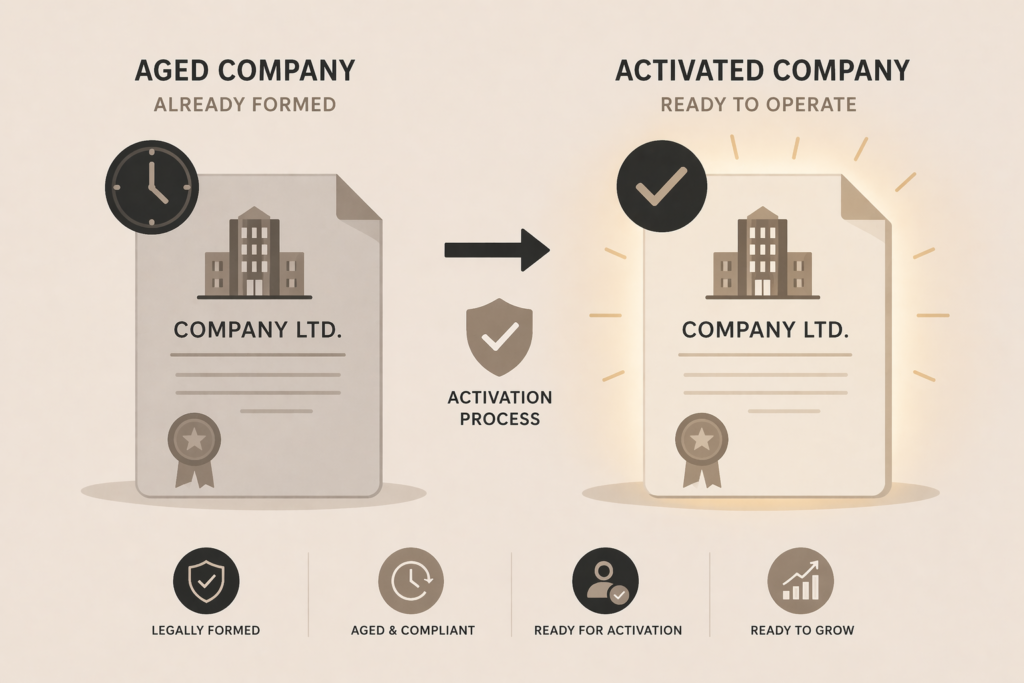
An aged corporation, also called a shelf corporation or aged shelf company, is a business entity that was legally formed years ago, kept active, but never used for real operations. It sits on the shelf and ages. When you acquire it, the business entity’s formation date transfers to you.
Why does that date matter so much? Because lenders use it as a proxy for risk.
According to the U.S. Small Business Administration, lenders evaluate multiple factors, including creditworthiness, repayment ability, and business profile. One of the most heavily weighted early filters is simply: how long has this business existed? Newer businesses statistically have higher failure rates, and lenders price that risk into their decisions by setting minimum age thresholds, typically one to two years of operating history.
Recent data from the Federal Reserve’s 2026 Small Business Loan Statistics confirms that “too short a time in business” is cited as a reason for denial by approximately 26% of rejected applicants. That is more than 1 in 4 denials tied solely to age.
How Aged Corporations Speed Up Business Funding Approval
Here is the core mechanic, explained.
The Time-in-Business Gate
Every lender runs your application through a series of filters before a human ever looks at it. The time-in-business check is usually one of the first. If your business is six months old and the lender requires two years, your application will be declined automatically. No further review happens.
An aged corporation changes that outcome. When you take ownership of a legally clean, pre-formed entity with a formation date from years ago, your business entity now satisfies that threshold. Your application clears the gate and reaches the next stage of underwriting.
That shift, from invisible to actually considered, is the primary value of an aged corporation in the funding process.
New Corporation vs. Aged Corporation: A Side-by-Side Look
| Factor | New Corporation | Aged Corporation |
| Time-in-Business Requirement | Fails 1–2 yr threshold | Already meets it |
| Application Reviewed by Lender | Auto-rejected at the gate | Full profile evaluated |
| Business Credit Profile | Needs to be built | Can start building immediately |
| Lender Perception | High-risk startup | Established, stable entity |
| Speed to First Funding | 12–24 months minimum | Weeks (with strong profile) |
| Cost to Acquire | $0 (start from scratch) | $500–$10,000+ depending on age |
As the table shows, an aged corporation does not win you a loan on its own. What it does is get your application into the room where the real evaluation begins.
What Aged Corporations for Business Funding Do NOT Do
This is where honest conversation matters most, because the aged corporations business funding approval space has its share of misleading marketing.
An aged corporation does not:
- Guarantee loan approval. Lenders still evaluate your full profile. The aged corp gets you in the door; your qualifications determine what happens next.
- Replace business credit building. A newly acquired aged entity has no credit history tied to your ownership. You still need to build tradelines, net-30 vendor accounts, and a strong commercial credit profile.
- Erase personal credit concerns. Most lenders still perform a personal credit check. A score below 600 will still create friction, even with a five-year-old entity.
- Make bad financials invisible. High existing debt, insufficient revenue, or missing documentation still sink applications. The aged corp unlocks the review stage; it does not rewrite your financial story.
Nav, a well-known business financial platform, notes clearly that using a shelf corporation to secure financing you would not otherwise qualify for can cross into legally problematic territory. The key distinction: using an aged corporation to satisfy a time-in-business threshold is legal and common. Using one to misrepresent your creditworthiness or fabricate operational history is fraud. Always work with a reputable provider and consult legal counsel if you have any uncertainty.
A Real-World Picture: What the Process Actually Looks Like
Marcus started a logistics consulting firm in early 2024. He had a solid personal credit score of 680, two anchor clients, and a clear business plan. But every lender he approached told him the same thing: come back in a year or two. His business was eight months old. He transferred ownership of a three-year-old, clean-shelf corporation. Within sixty days, he had a $35,000 business line of credit approved through a regional bank. The line was not based on a miracle; it was based on the fact that his application now cleared the eligibility filter, and his actual qualifications were genuinely strong once anyone looked at them.
Marcus’s experience is representative, not exceptional. The aged corporation did not assess his creditworthiness. It made his creditworthiness visible.
What You Must Build Alongside an Aged Corporation
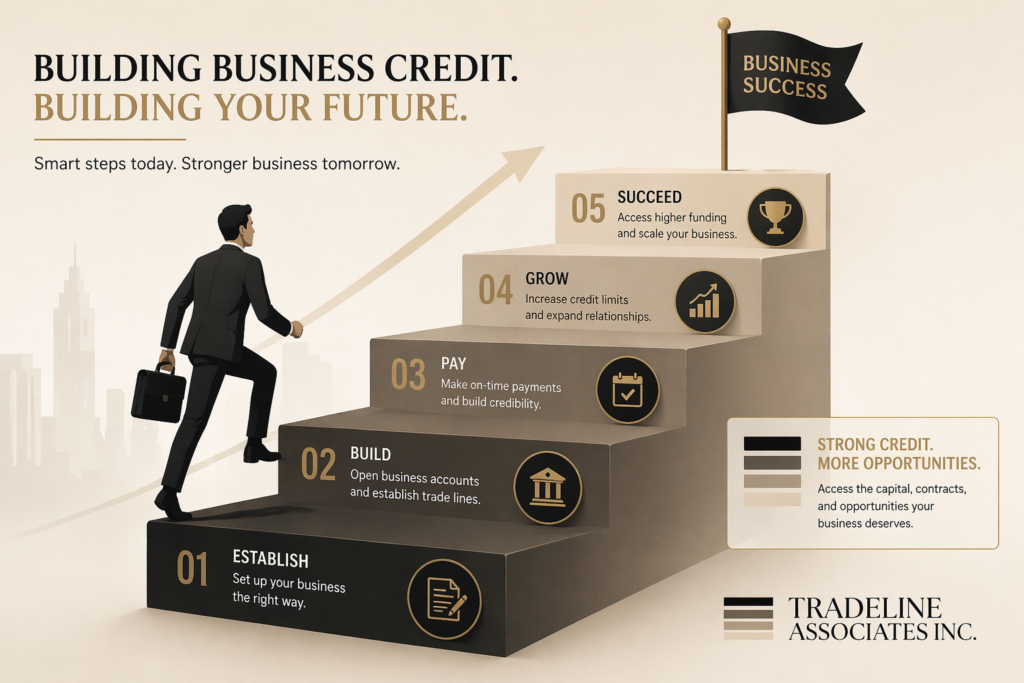
To get maximum benefit from an aged corporation in your funding strategy, you need to build the rest of your business credit profile actively. Think of it as two parallel tracks running at the same time.
| What Aged Corp Handles | What You Still Need to Build |
| Time-in-Business Gate | Personal Credit Score (650+ ideal) |
| Business Formation Date | Business Credit Profile (D&B, Experian) |
| Entity Credibility Signal | Bank Statements (3–6 months) |
| Lender Eligibility Threshold | Revenue Documentation |
| Government Contract Eligibility | Business Address, Phone & EIN |
The Practical Steps After Acquisition
Once you have taken ownership of a clean aged corporation, here is the sequence most credit-building professionals recommend:
- Open a dedicated business bank account and maintain consistent deposit activity for at least 60 to 90 days. Lenders use bank statements to verify operational legitimacy.
- Register your DUNS number with Dun & Bradstreet. This is the foundation of your commercial credit profile and is referenced by most major lenders and vendors. Registration is free and takes a few weeks to activate.
- Apply for net-30 vendor accounts with suppliers that report to commercial credit bureaus like Dun & Bradstreet, Experian Business, and Equifax Business. These vendor tradelines start building your business credit score.
- Establish a complete business identity, a professional address (not a P.O. box for most lenders), a listed business phone number, a website, and an EIN. Lenders verify these signals before approving credit.
- Monitor your personal credit score and work on any issues there in parallel. Many business funding programs still use personal credit as a secondary underwriting factor, especially for amounts under $100,000.
How to Choose a Reputable Aged Care Provider
Not all aged corporations are created equal, and the space does have bad actors. Here is what to look for when evaluating a provider:
Green Flags
- Provides a Certificate of Good Standing from the state of formation
- Discloses the entity’s full formation history, including any previous owners
- Confirms no prior business activity, outstanding liabilities, or tax liens
- Offers full documentation transfer, including the EIN and articles of incorporation
- Has verifiable reviews, a real business address, and responsive support
Red Flags to Avoid
- Claims the aged corporation already has established credit lines ready to use
- Guarantees a specific funding amount or promises fast cash with no underwriting
- Cannot or will not provide state formation documents on request
- Asks you to keep the acquisition quiet or advises not telling your lender
The transfer of a clean-aged corporation typically takes 24 to 48 hours through a legitimate provider. Building the business credit profile that works alongside it takes several weeks to a few months of consistent, deliberate action. Neither is a same-day miracle, but together they are dramatically faster than waiting years with a new entity.
Is an Aged Corporation Right for Your Situation?
This strategy makes the most sense if:
- Your business is less than one to two years old, and you have been told that time in business is the barrier
- You are launching a new venture and want to avoid the waiting period entirely
- You have been specifically denied for funding, with time in business cited as the reason
- You have a genuinely strong profile, good personal credit, real revenue, solid financials, but cannot get evaluated because of your age
It is not the right fit if:
- You have serious credit problems, high existing debt, or insufficient revenue; those issues need to be addressed first
- You are looking for a way to skip all the work, but the profile building still needs to happen
- You are not prepared to properly document and structure the acquisition
Frequently Asked Questions
Is buying an aged corporation legal?
Yes. Purchasing an existing business entity is legal in all U.S. states. The key is that the acquisition must be properly documented, the entity must be genuinely clean (no liabilities, no prior activity), and you cannot use it to misrepresent your financial qualifications to lenders. Using a clean aged corporation to satisfy a lender’s time-in-business requirement is standard practice, using one to commit fraud is not.
How much does an aged corporation cost?
Prices generally range from $500 to $10,000 or more, depending on the age of the entity, the state of formation, and whether any additional setup (EIN registration, business credit preparation) is included. Older corporations command higher prices because they satisfy more stringent lender thresholds.
How long does it take to get funded after acquiring an aged corporation?
The entity transfer itself typically takes 24 to 48 hours with a reputable provider. Funding timelines after that depend on how quickly you build the surrounding business credit profile. Entrepreneurs with strong personal credit and properly documented businesses have accessed credit lines within 30 to 90 days of acquisition. This varies significantly based on individual circumstances.
Will lenders know I transferred ownership of an aged corporation?
Lenders evaluate the business entity’s formation date, its credit profile, and its documentation — not typically the ownership transfer history. As long as the acquisition is legally documented and the entity is genuinely clean, ownership transfer is a normal business event. Be transparent with your lender if asked directly.
What states are best for aged corporations?
Delaware and Nevada are the most commonly used states for shelf corporations because of their business-friendly legal environments, strong privacy protections, and established legal frameworks. However, the state of formation matters less than the cleanliness of the entity and the quality of documentation. Your business may still need to foreign-qualify in the state where you actually operate.
Can I use an aged corporation for SBA loans?
SBA loans have additional underwriting requirements that go beyond time in business, including two to three years of business tax returns, personal financial statements, and collateral in many cases. An aged corporation that has never filed tax returns may not satisfy those additional documentation requirements for SBA products specifically. It is more commonly used to access business credit lines, vendor credit, and non-SBA commercial financing.
The Bottom Line on Aged Corporations and Business Funding Approval
The honest answer to whether aged corporations business funding approval actually works is: yes, with the right expectations.
An aged corporation removes the single most common automatic rejection trigger: time in business. It does not manufacture qualifications you do not have. What it does is make the qualifications you do have count for something by ensuring your application reaches the stage where they are actually evaluated.
If your business is strong but new, this is a legitimate, legal, and practical strategy to move faster. If your business fundamentals need work, no aged corporation will paper over that, and it should not. Build the profile, document everything properly, work with a trustworthy provider, and use the aged corporation as the foundation it is designed to be.
Want to learn more about building business credit alongside an entity transfer? Explore our guide on Business Credit Building for New Entities or speak with a credit specialist to evaluate your specific situation.