

Most business owners apply for funding and get denied — then spend weeks wondering what went wrong. The truth is, they were never lender ready in the first place. Being lender-ready is not about having a perfect business. It is about presenting your business in the specific way that lending systems are designed to evaluate.
The encouraging part? Nearly every issue that gets businesses rejected can be fixed. This guide walks you through a practical, lender ready business funding 30 45 days plan that addresses each problem area in the right sequence. Follow it, and you walk into your funding application from a position of strength.
Why Most Lender Ready Business Funding Tests Fail:

Lenders do not evaluate businesses the way you might expect. Before anyone reads your story or reviews your revenue, automated systems cross-check your information against commercial databases. If something does not match — your business name, your address, your phone number — the file gets flagged or rejected before a human ever looks at it.
According to Lendio’s small business loan application guide, having incomplete or inconsistent documentation alone can cause unnecessary delays or outright denials, even when you are otherwise well-qualified. That is a frustrating reality, but it means the fixes are largely within your control.
The 30 to 45-day window below is not a shortcut. It is a focused sprint that puts the right things in order before you submit a single application.
The 30 to 45 Day Lender Ready Plan
Days 1–7: Audit Your Business Identity
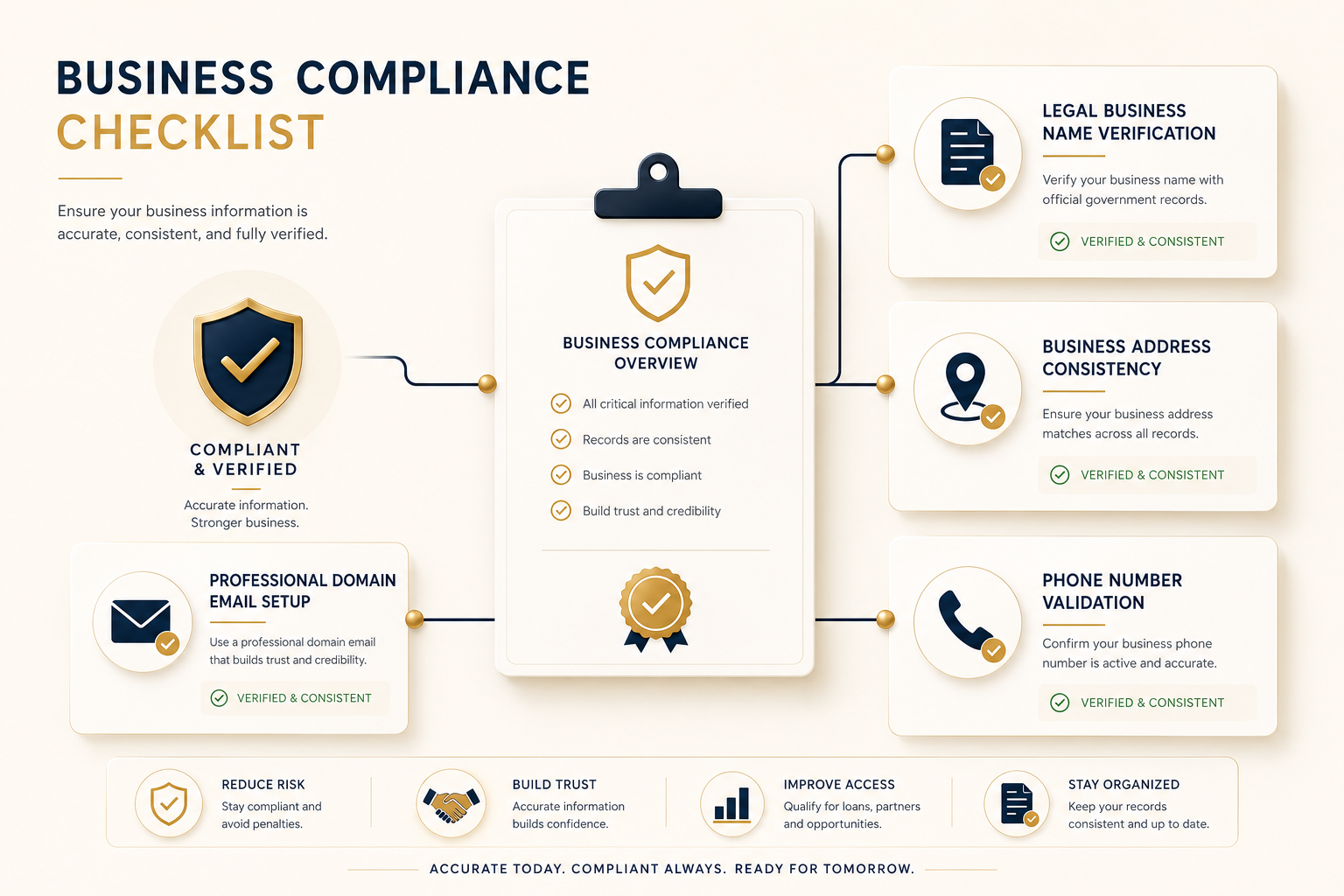
Your business identity is the foundation of every lender evaluation. It is how your company appears across all the public and commercial databases that lenders reference — your Secretary of State filing, your business bank account, your DUNS profile, your Google Business listing, and your 411 directory entry.

The single most common trigger for automatic rejection is inconsistency. If your business name reads “ABC Marketing LLC” in your state filing but “ABC Marketing” on your bank account, that discrepancy raises a red flag. The same applies to address formatting and phone numbers.
Spend the first seven days pulling every place your business information lives and comparing it against your official state registration. Update anything that does not match exactly. It is tedious, but it is the single most important thing you can do before moving forward.
What to Audit in Week One
|
Data Point |
Where It Must Match |
|
Legal Business Name |
State filing, bank, DUNS, Google, 411 |
|
Business Address |
All directories, bank account, tax filings |
| Phone Number |
411, Google Business, bank records |
| Business Email |
Should use your domain, not Gmail |
Days 7–14: Build Your DUNS Profile and Directory Presence
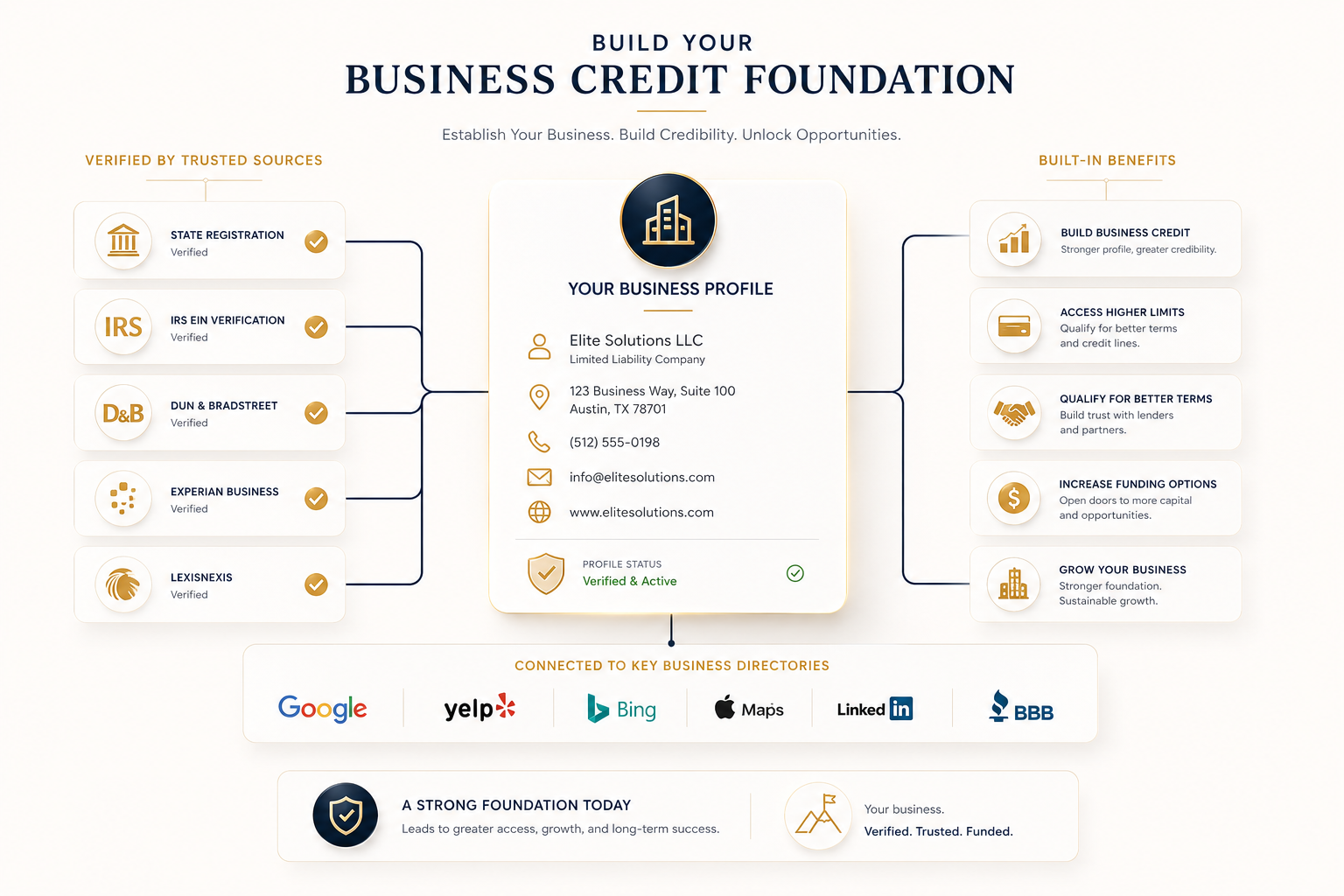
If your business does not have a DUNS number registered with Dun & Bradstreet, this is your most urgent task. A DUNS number is free to obtain — go directly to the D&B website and register. Processing takes a few business days, and without it, your business has no profile at the largest commercial credit bureau in the country.
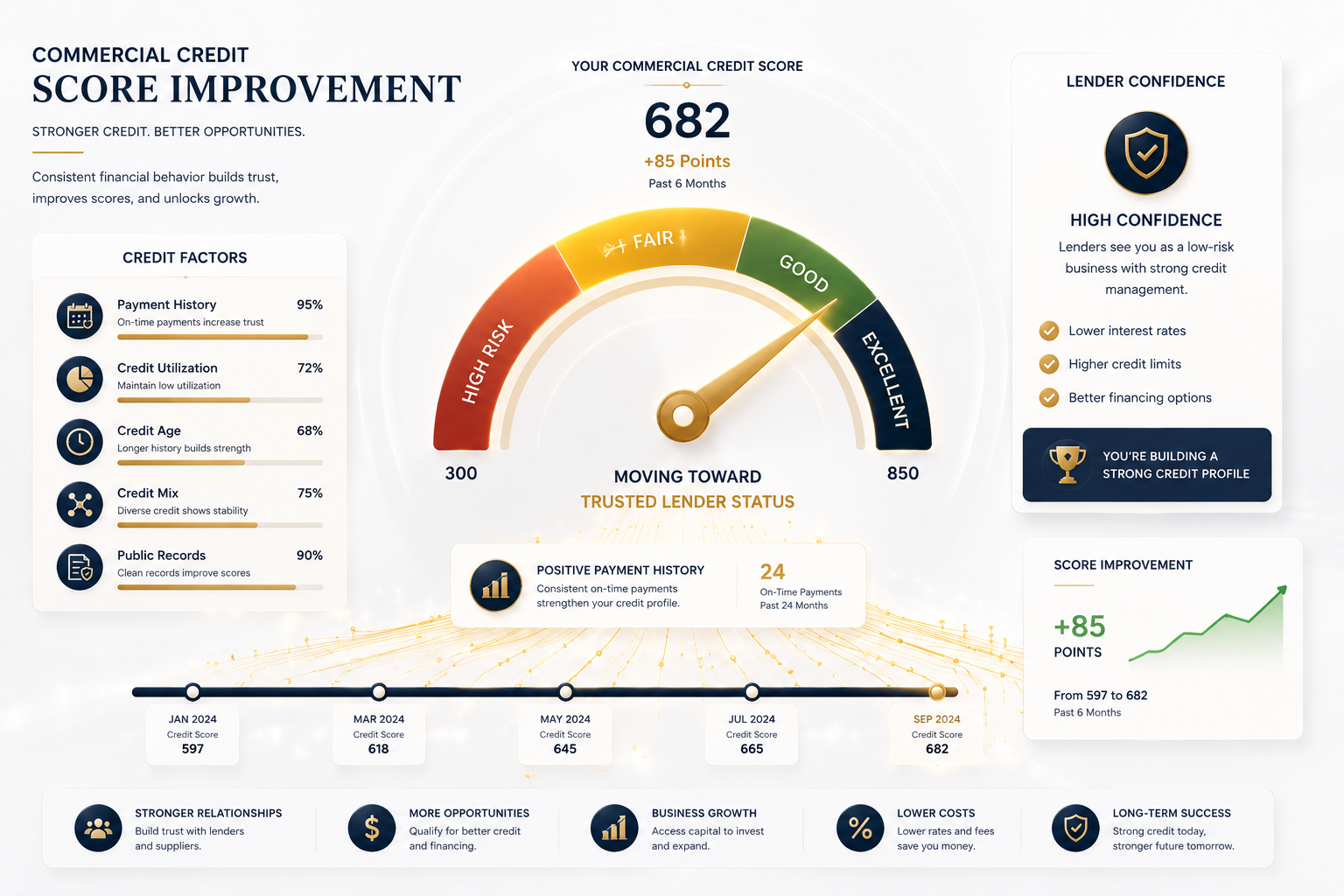
More importantly, without a DUNS number, you cannot build a Paydex score — D&B’s commercial payment behavior score that ranges from 1 to 100. According to Dun & Bradstreet, a Paydex score of 80 or higher signals low payment risk to lenders. Scores between 0 and 49 indicate high risk. Many lenders check this score before approving any business credit application.
Also, confirm this week:
- Your business phone number is listed in 411 and major business directories. Lenders use directory listings as a basic legitimacy check. A business that cannot be found publicly raises questions about whether it is actually operating.
- Your business email address uses your company domain. A Gmail address on a funding application signals a lack of basic infrastructure to underwriters reviewing your file.
Days 14–25: Strengthen Your Business Bank Account
Your business bank account history is one of the most heavily weighted data points in the entire lender evaluation process. Lenders look for three things: consistent deposit activity, a healthy average daily balance, and no patterns that suggest financial instability, such as overdrafts, erratic large withdrawals, or months with no deposits.
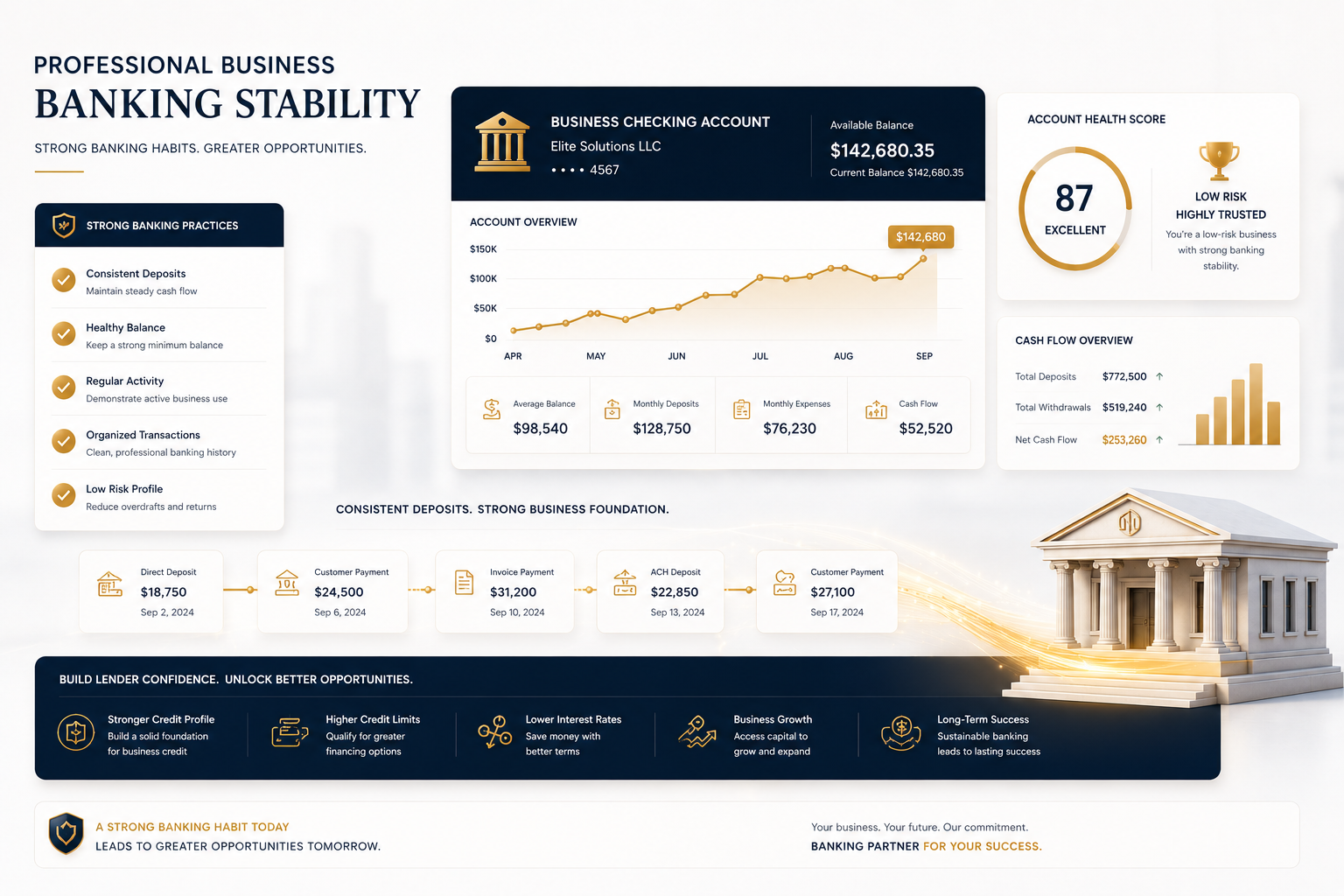
If you do not yet have a dedicated business bank account separate from your personal finances, open one immediately. Mixing personal and business finances is one of the fastest ways to disqualify yourself from most lender ready business funding programs.
What lenders want to see in your account history:
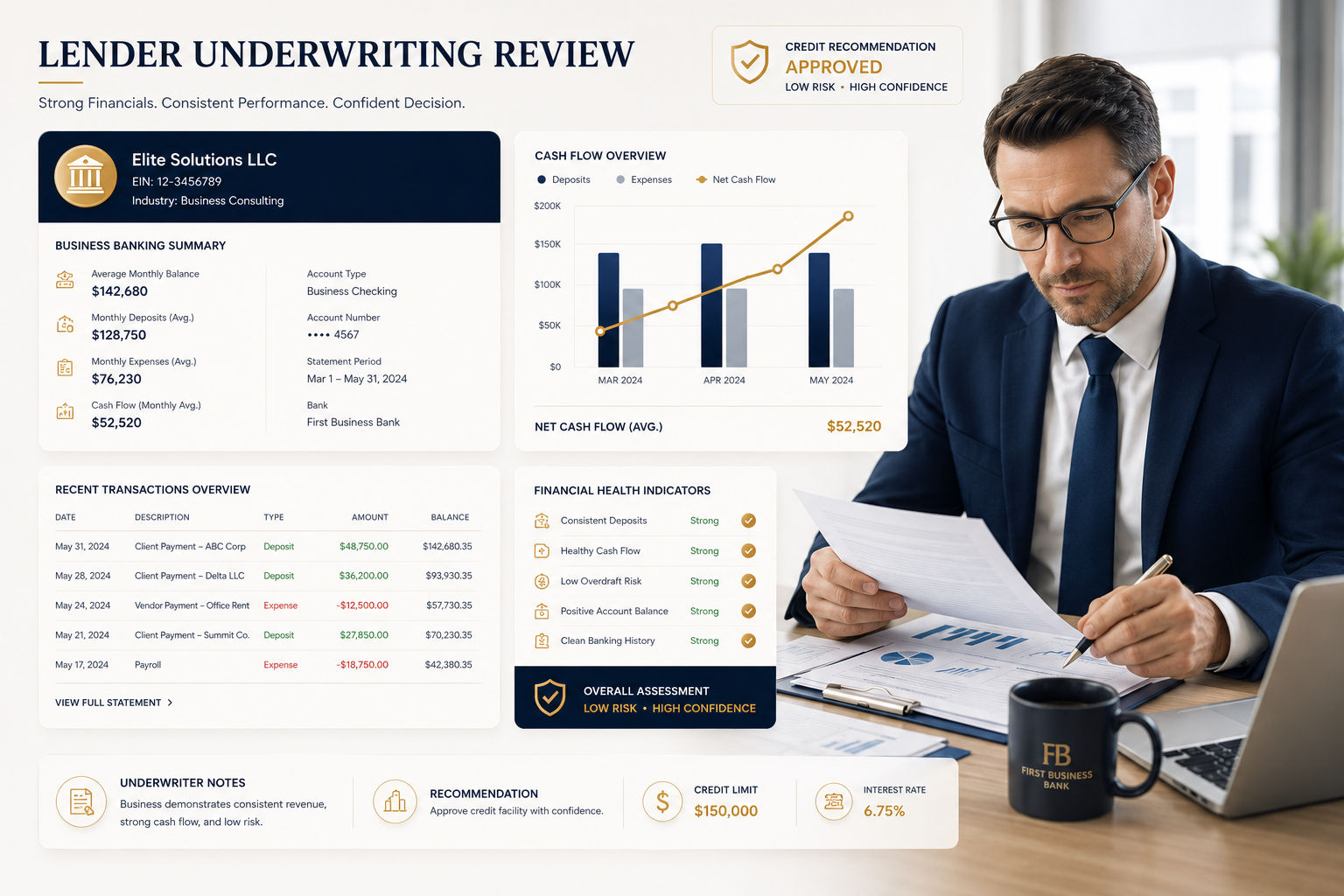
- Regular, consistent deposits that reflect actual business activity — the pattern matters as much as the total amount
- An average daily balance that meets or exceeds the lender’s minimum threshold, which varies by program
- At least three to six months of history; the longer the track record, the stronger your application
If your account is new or shows low activity, start making regular deposits now. Even modest, consistent activity builds a better profile than sporadic large amounts.
Days 25–35: Add Tradelines to Your Commercial Credit File
An empty commercial credit file is almost as damaging as a bad one. Lenders want to see that your business has a payment track record, and the fastest legal way to build that record is through vendor tradelines — also called net-30 accounts — with suppliers who report to commercial bureaus.
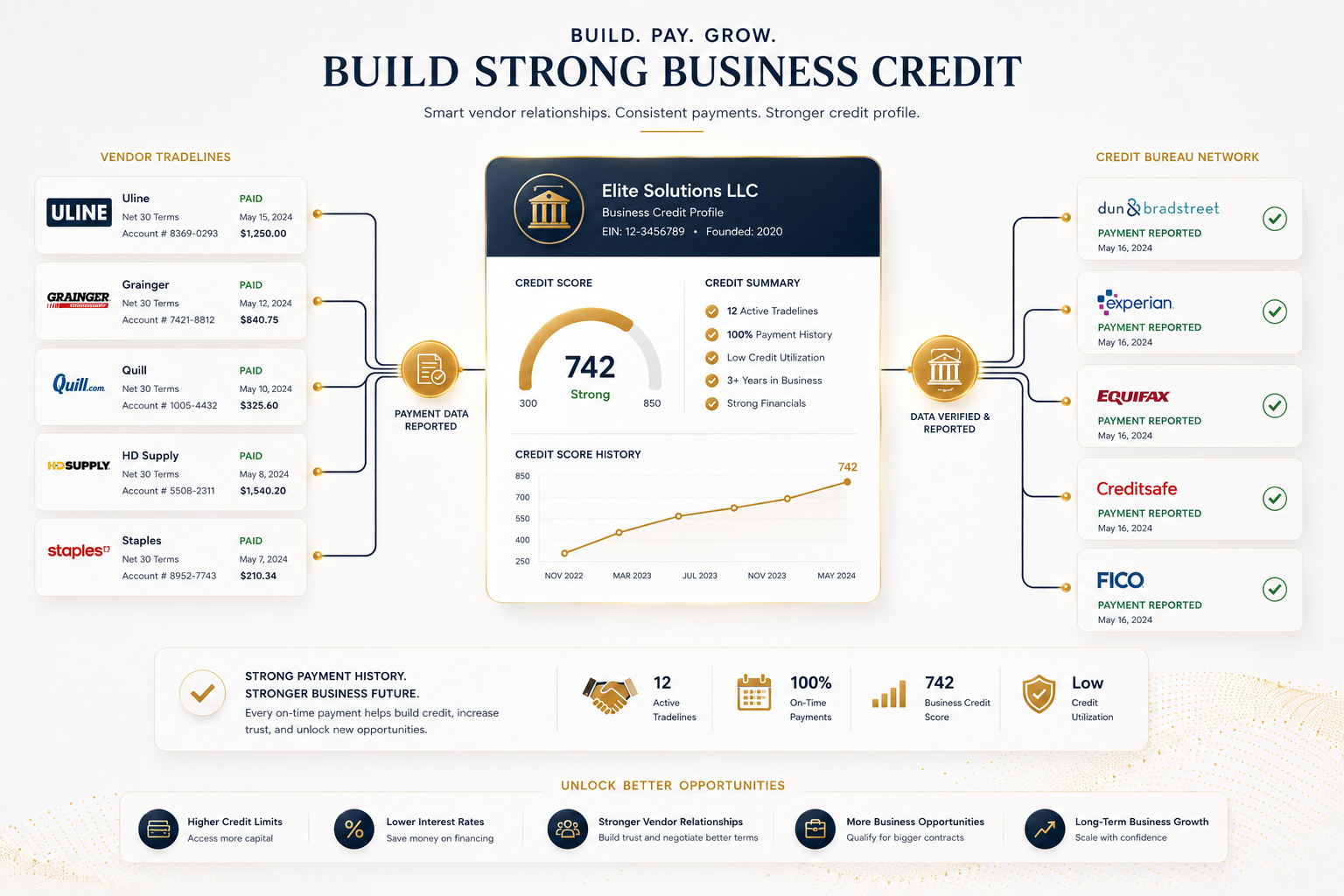
According to Dun & Bradstreet, a Paydex score cannot even be generated until D&B receives payment data from at least two active tradelines with three total credit experiences. That means an empty file literally produces no score for a lender to evaluate.
How to build tradelines quickly:
- Open two or three vendor accounts with suppliers known to report to D&B, Experian Business, or Equifax Business
- Make a small purchase on each account
- Pay every invoice before the 30-day window closes — early payment is specifically rewarded by the Paydex system and pushes scores above the 80 threshold that signals low risk
Two or three accounts with early payment history reporting is a meaningfully better position than no profile at all. The goal is not a perfect score in 30 days — it is a visible, positive payment record that tells a lender your business pays its obligations.
Days 35–45: Prepare a Complete Documentation Package
By the time you apply, your documentation should be ready to submit without any back-and-forth delays. Missing or inconsistent documents are one of the leading causes of application stalls and denials, according to multiple lender checklists reviewed for this article.
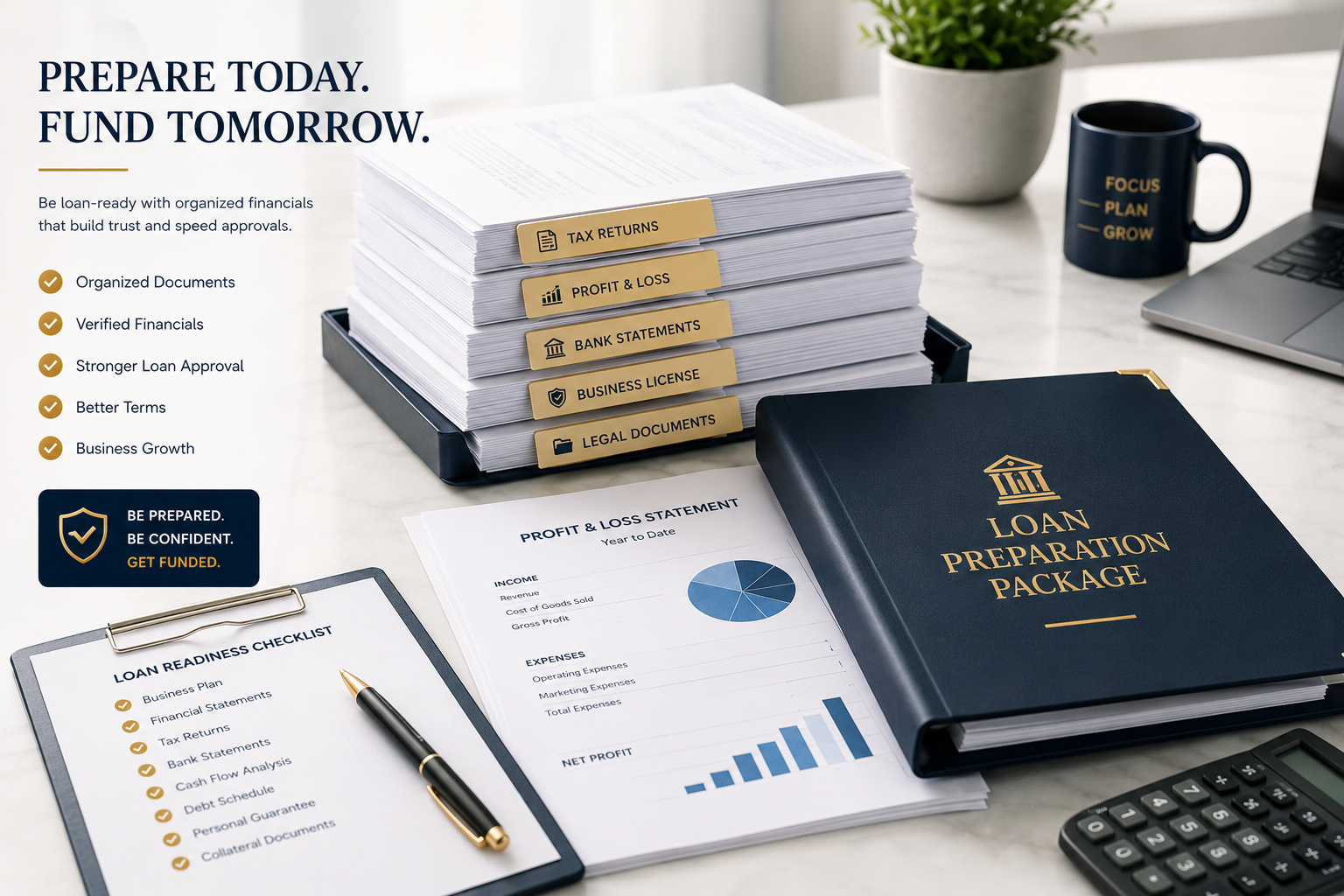
Standard Documents Most Lenders Require
| Document | Notes |
| Business Tax Returns | Most recent two years; must match bank deposit activity |
| Business Bank Statements | Three to six months, showing consistent activity |
| Profit & Loss Statement | Current year, prepared by an accountant if possible |
| Personal Tax Returns | Usually required for the business owner |
| Business Plan or Loan Purpose Statement | Clear explanation of how funds will be used |
Review every document before submission and make sure the numbers align across all of them. A discrepancy between your reported income on a tax return and your bank deposits — even if there is an innocent explanation — is the kind of inconsistency that triggers manual review or denial.
According to the U.S. Small Business Administration, if you have trouble qualifying with traditional lenders, SBA-guaranteed loans are worth exploring. The SBA’s Lender Match tool connects businesses with lenders willing to work with higher-risk profiles, and the SBA approved over $31 billion through its 7(a) loan program in 2024 alone.
The One Factor You Cannot Fake: Time in Business
All of the preparation above matters enormously — but only if your business entity meets the minimum time-in-business requirement for the programs you are targeting. Most conventional business lenders require at least 12 to 24 months of operating history before they will approve an application, regardless of how strong your profile looks on every other dimension.
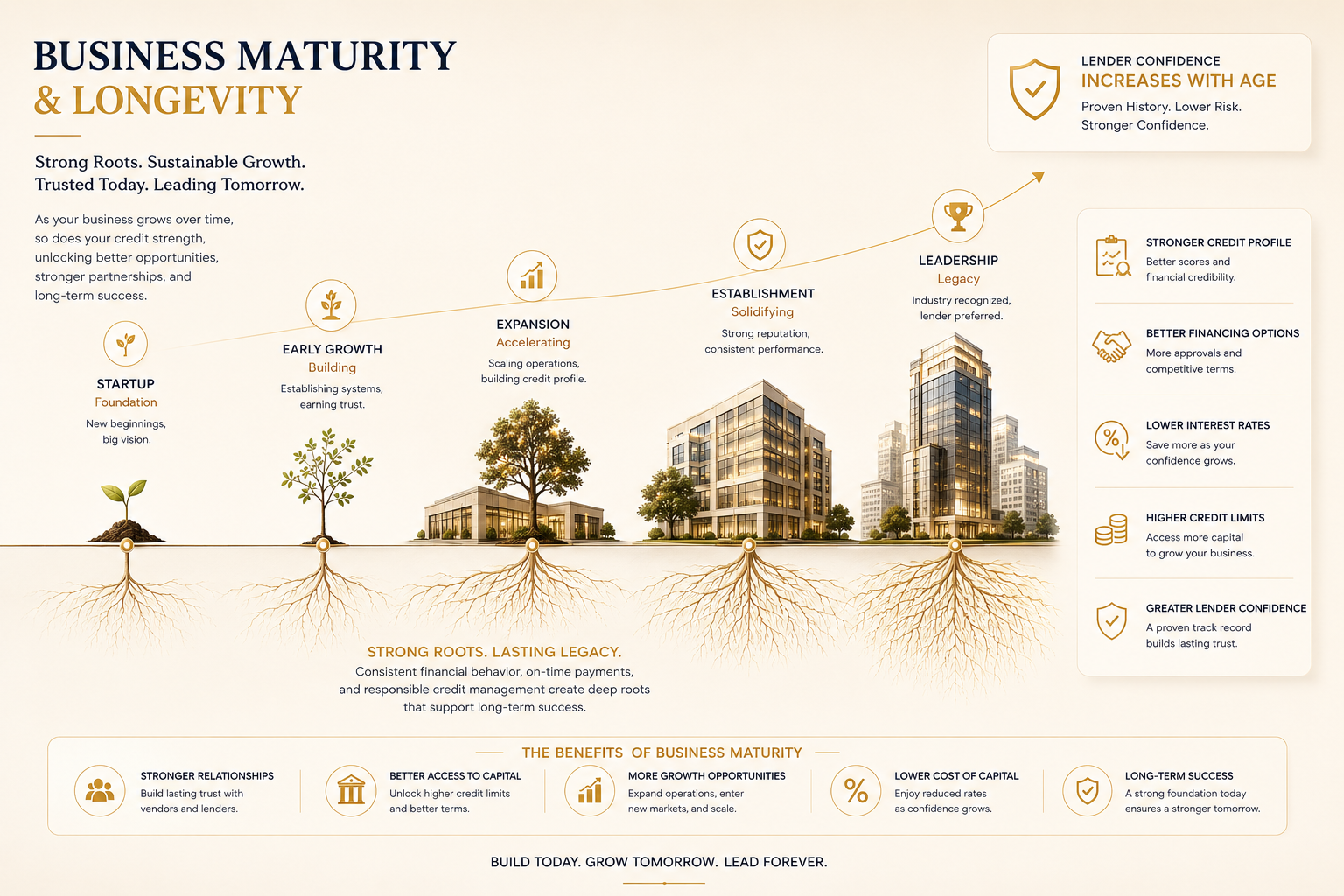
If your company was formed recently, this single factor can override everything else you have done to prepare. It is not a reflection of your business’s potential — it is a structural requirement built into most underwriting models.
If time in business is the obstacle standing between you and funding, understanding this limitation early saves you the time and credit inquiries that come from applying to programs you cannot yet qualify for. Research which lender ready business funding programs are accessible to newer entities — some alternative lenders, revenue-based financing programs, and SBA microloan products have more flexible time-in-business requirements than traditional bank loans.
Common Mistakes That Derail Lender Ready Applications
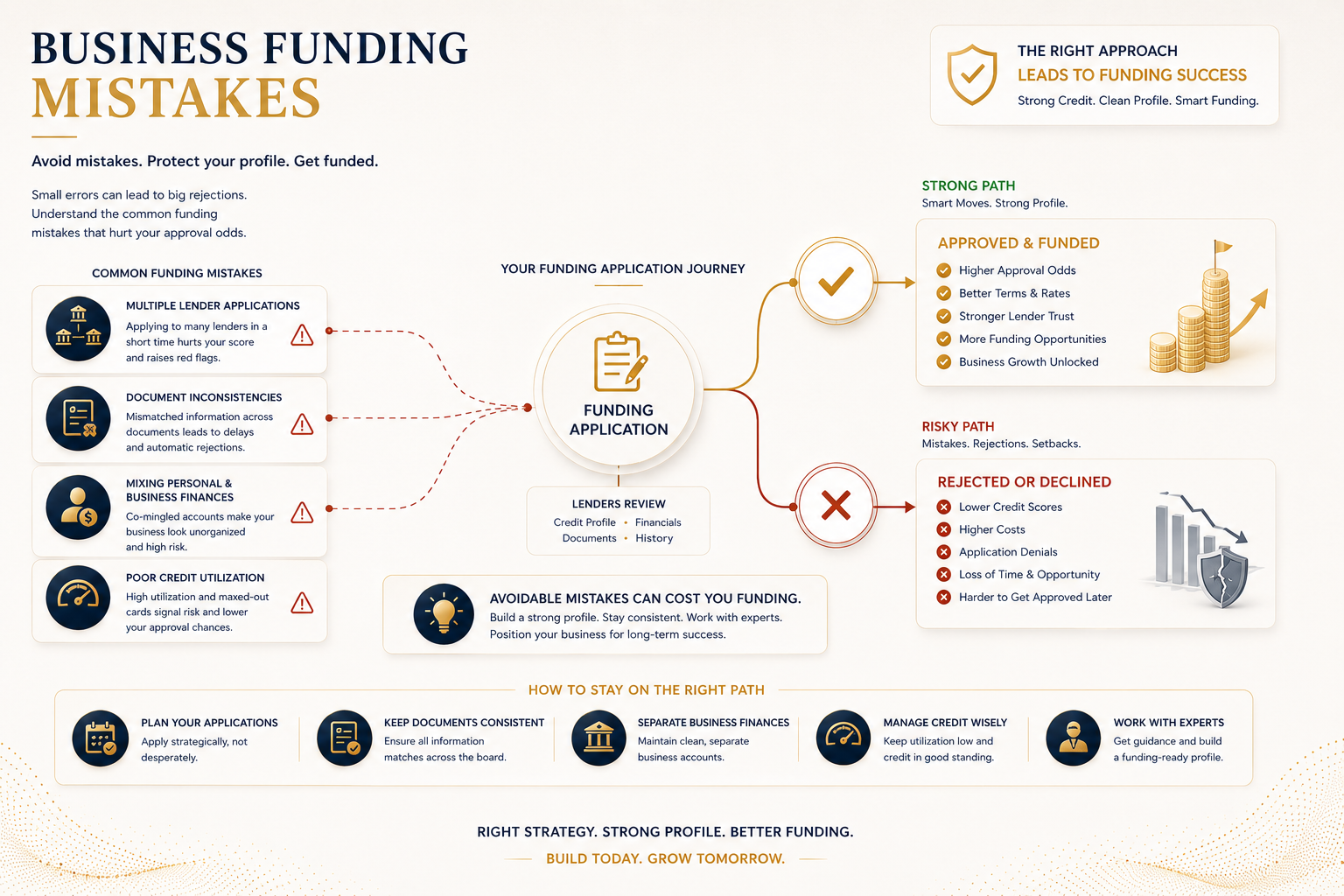
Even business owners who do the preparation work sometimes make avoidable errors right before or during the application process. Here are the ones that cause the most damage:
- Applying to multiple lenders simultaneously. Each hard inquiry can lower your personal credit score and signal financial desperation to lenders reviewing your file.
- Submitting documents without reviewing them. Numbers that do not align across your tax returns, bank statements, and profit-and-loss report trigger manual review, even when the explanation is innocent.
- Using a personal account for business activity. This disqualifies your application from most programs before your financials are even reviewed.
- Not having a clear loan purpose. Lenders want a specific, written explanation of how you intend to use the funds and how they will contribute to repayment capacity.
Frequently Asked Questions
Q: How long does it really take to become lender ready?
Most businesses can address the core issues — identity consistency, DUNS registration, directory listings, and documentation — within 30 to 45 days if they work through each step systematically without skipping the early foundation work.
Q: What credit score do I need for a business loan?
Personal credit requirements vary by program. Many lenders accept scores of 650 or above for standard products, but SBA loans typically require 680 or higher, and stronger scores consistently unlock better rates and terms.
Q: Do I need a business plan to apply for funding?
Not always, but you should always have a clear, written explanation of your loan purpose ready. For SBA loans specifically, a formal business plan with financial projections is typically required by the underwriting process.
Q: What is the fastest way to build business credit from scratch?
Open two to three vendor accounts with suppliers that report to commercial bureaus, make a small purchase on each, and pay early — before the net-30 window closes. This is the fastest legitimate path to a scorable Paydex profile.
Q: What happens if I get denied after doing all of this preparation?
Ask the lender for specific denial reasons in writing. Lenders are generally willing to provide this, and the feedback tells you exactly what to address before your next application — whether that is time in business, average daily balance, or a credit issue you were not aware of.
Final Checklist: Are You Lender Ready?
Before submitting any lender ready business funding application, confirm the following:
- [ ] Business identity is consistent across all databases and directories
- [ ] DUNS number is registered and active
- [ ] Business phone is listed in 411 and major directories
- [ ] Business email uses a company domain, not Gmail
- [ ] Dedicated business bank account is open and active for 3–6 months
- [ ] Average daily balance meets or exceeds lender minimums
- [ ] At least two vendor tradelines are active and reporting to commercial bureaus
- [ ] All tradeline invoices have been paid early
- [ ] Two years of business tax returns are available and consistent
- [ ] Three to six months of bank statements are organized and ready
- [ ] The profit and loss statement is current and prepared by an accountant
- [ ] The loan purpose statement is written, specific, and clearly tied to repayment capacity
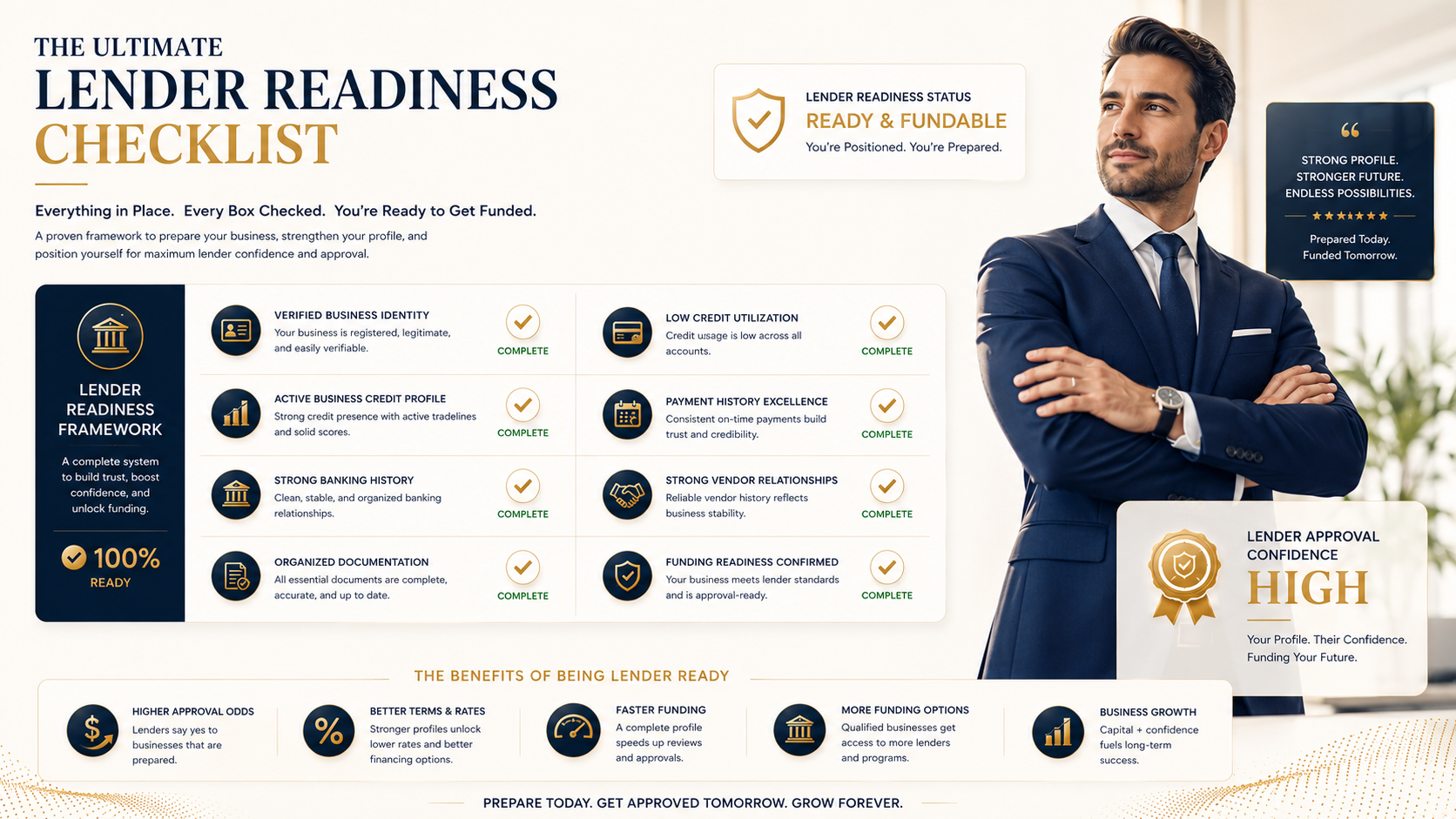
When every box on this list is checked, you are not hoping for approval. You are applying for a position where lenders have every reason to say yes.