
Understanding business credit vs personal credit is essential for entrepreneurs who want stronger funding approval chances, higher borrowing limits, and long-term financial stability. While both types of credit measure financial trustworthiness, they serve different purposes and are evaluated differently by lenders.
Many business owners initially rely on personal credit when applying for financing. However, as a company grows, separating financial profiles becomes critical for improving credibility, protecting personal assets, and increasing eligibility for funding solutions.
Companies like Tradeline Associates Inc. help businesses develop structured credit profiles that align with lender expectations and improve overall fundability signals.
This guide explains the key differences between business credit and personal credit, how lenders evaluate both, and how to build a strong credit foundation that supports business growth.
What Is Personal Credit?
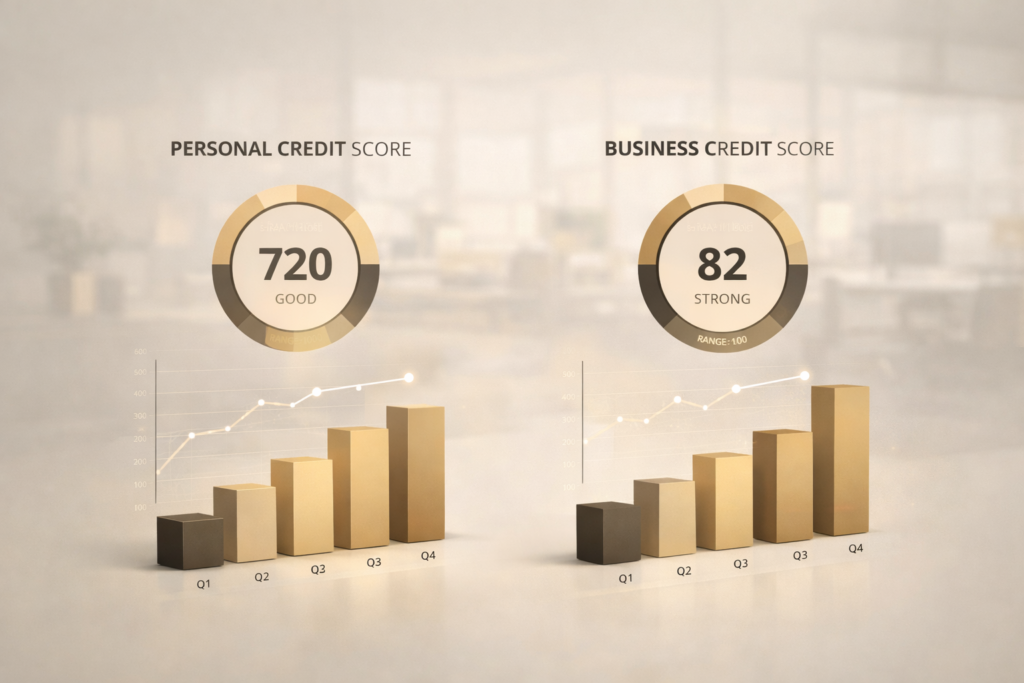
Personal credit refers to an individual’s financial history and borrowing behavior linked to their Social Security Number (SSN). Lenders use personal credit reports to evaluate how responsibly someone manages debt, repays loans, and maintains credit balances.
How Many Personal Credit Bureaus Are There?
Core Credit Bureaus:
- Experian
- Equifax
- TransUnion
Secondary / Additional Bureaus:
- LexisNexis Risk Solutions
- ChexSystems
- Innovis
- CoreLogic
In total, there are 6–8+ personal credit-related reporting systems that can influence approvals.
Personal Credit Score Types
Personal credit scores are commonly calculated using two primary models: the FICO Score and the VantageScore.
FICO Score (Fair Isaac Corporation)
The FICO Score, developed by Fair Isaac Corporation, is the most widely used scoring model by lenders. It is commonly used for:
- Mortgages
- Credit cards
- Auto loans
How Many FICO Scores Are There?
You have 20+ different FICO scores, depending on:
- Credit bureau
- Industry
- Model version
Common FICO Versions:
- FICO Score 8
- FICO Score 9
- FICO Score 10 / 10T
- FICO Auto Scores
- FICO Mortgage Scores
Where You Can Find Your FICO Scores:
- myFICO
- Experian
- Many banks and credit card providers
Important: The score you see may not be the exact score a lender uses.
VantageScore
The VantageScore was developed in 2006 collaboratively by the three major credit bureaus—Equifax, Experian, and TransUnion.
It is commonly shown on platforms like Credit Karma, which typically displays Equifax and TransUnion VantageScores.
Important insight: VantageScores can sometimes appear 20–30 points higher than your actual FICO score, which is what most lenders use.
What Makes Up a Personal Credit Score?
- 35% — Payment History
- 30% — Credit Utilization
- 15% — Length of Credit History
- 10% — Credit Mix
- 10% — New Credit
Timing: What Most People Were Never Taught
Every credit card has two critical dates:
Due Date
The date your payment is required. This is typically the minimum amount due that must be paid to keep the account in good standing and avoid late fees or negative marks.
Statement Closing Date
The date your balance is reported to the credit bureaus. This is the number that directly impacts your credit utilization and score.
How to Find Your Statement Closing Date
- Log into your account and review your statement
- Look for “Statement Date” or “Closing Date”
- Call the number on the back of your card
The closing date is often a few days after your due date, but it varies by issuer.
Why This Matters
Your credit utilization (30% of your score) is based on the balance reported on the statement closing date, not the due date.
Example:
- $10,000 limit
- $7,000 balance at closing
- 70% utilization
This can lower your score even if you only pay the minimum amount due.
Simple Timing Strategy
- Pay balances down 7–10 days before closing date
- Keep utilization under 30% (ideally 10%)
- Pay remaining balance by due date
Key Takeaway
Paying the minimum on the due date keeps your account current, but your score is determined by what reports on the closing date.
What Is Business Credit?
Business credit measures a company’s financial trustworthiness and is tied to an EIN instead of an SSN. For more detail on Business Credit, Visit https://tradelineassociates.com/what-is-business-credit-and-why-it-matter/
How Many Business Credit Bureaus Are There?
There are dozens globally,
- But only ~8–12 actually matter
- And realistically 3–5 control most funding outcomes
Core Business Credit Bureaus:
Tier 2 (Lender Data Systems):
- Small Business Financial Exchange
- FICO SBSS
Tier 3 (Support / Verification):
- LexisNexis Risk Solutions
- CreditSafe USA
- Ansonia Credit Data
- Cortera
- PayNet
Business Credit Score Types
- PAYDEX (D&B)
- Intelliscore (Experian)
- Equifax Risk, Delinquency, and Failure Scores
- SBSS (0–300)
Key Components That Make Up Business Credit
- Payment history
- File depth
- Time in business
- Industry risk
- Public records
- Revenue
- Payment trends
Business Credit vs Personal Credit: Key Differences
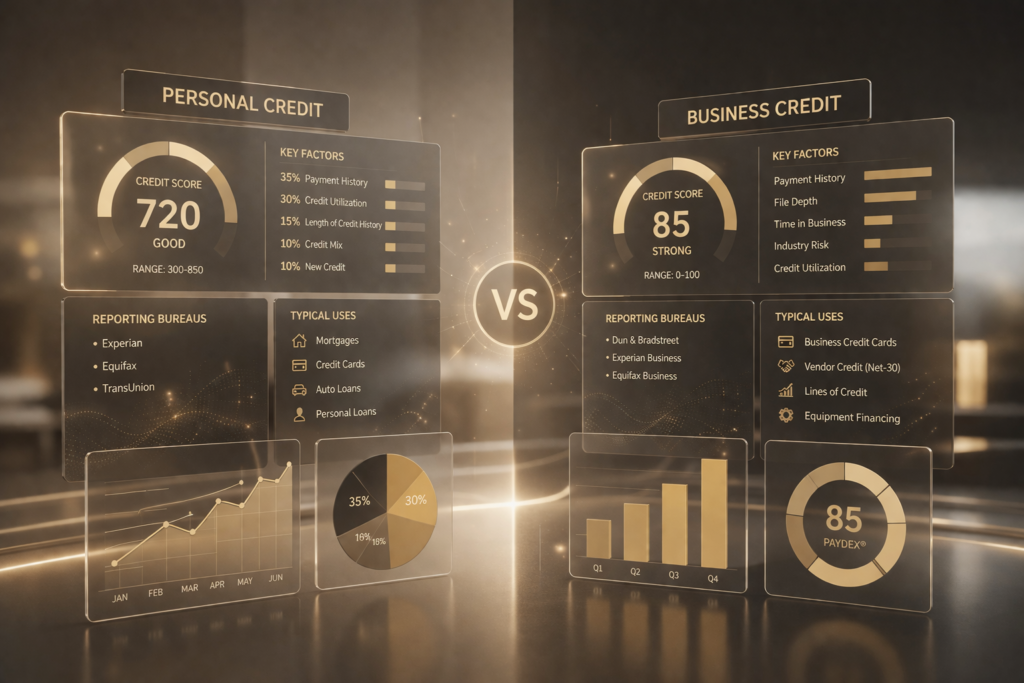
| Feature | Business Credit | Personal Credit |
| Identification | EIN | SSN |
| Score Range | 0–100 (varies) | 300–850 |
| Reporting Agencies | D&B, Experian Business, Equifax | Experian, TransUnion, Equifax |
| Liability | Business responsible | Individual responsible |
| Purpose | Business financing | Personal borrowing |
Borrowing Capacity Differences
Lenders evaluate:
- Payment history
- Credit depth
- Revenue
- Utilization
- Payment trends
Over time, strong business credit and comparable accounts that lenders can see when reviewing your business credit profile can reduce reliance on personal guarantees (PGs).
BUSINESS CREDIT COMPLIANCE (Critical for Approvals)
Lenders verify your business across:
- Secretary of State
- IRS
- Credit bureaus
- LexisNexis Risk Solutions
Must Match:
- Business Name
- Business Address
- Business Phone
- Professional Email
- Website
Why This Matters
If your information does not match:
- Applications can be flagged
- Delays can occur
- Approvals can be denied
How Personal Credit Affects Business Credit Approval
Many lenders evaluate personal credit during early-stage funding decisions. Startups and newer businesses without established business credit profiles are often required to provide a personal guarantee (PG).
Common evaluation factors include:
- Payment history reliability
- Debt levels and utilization
- Number of open credit accounts
- Credit inquiry frequency
In these early stages, lenders rely on personal credit and a personal guarantee (PG) to reduce risk and ensure repayment.
Over time, as your business builds strong credit history and develops comparable accounts that lenders can verify on your business credit profile, reliance on personal guarantees (PGs) begins to decrease.
Eventually, with a well-established business credit profile, consistent payment history, and strong financial data, businesses can qualify for vendor accounts, business credit cards, and financing without requiring a personal guarantee (no PG).
Types of Business Credit Accounts
- Vendor tradelines (Net-30)
- Business credit cards
- Lines of credit
- Term loans
- Equipment financing
- Invoice factoring / A/R financing
- Fleet cards
- Store credit accounts
How to Build Business Credit Step-by-Step
- Register your business and obtain an EIN
- Open a business bank account
- Establish vendor tradelines
- Monitor credit reports
- Maintain responsible utilization
Final Thoughts
Personal credit helps you start.
Business credit helps you scale.