Clean Aged Shelf Companies, Shell Companies & Privacy States
Businesses researching company formation often run into a confusing set of terms: shelf corporations, aged companies, shell companies, and anonymous formation states. Some articles treat them as identical. Others treat them as suspicious. In reality, these are not illegal tricks or special entity types; they are descriptions of how the
company is formed and how it is used.
This guide explains the legality of aged shelf companies, what shell companies are used for, and how privacy-friendly formation states work in modern business and compliance systems.
What Are Clean Aged Shelf Companies?
A clean aged shelf company is a business entity that was formed in the past, maintained in good standing, and left unused until ownership transfers to a new operator. “Clean” generally refers to the absence of operating liabilities, meaning the company has not conducted business transactions, incurred debt, or created contractual obligations before transfer.
Key characteristics of aged shelf corporations
- Previously formed LLC or corporation
- Maintained with required filings
- No trading or operating activity
- Transferable ownership
- Ready for activation
Once acquired, the company’s real operational history begins the moment the new owner starts business activity.
Why Shelf Corporations Exist
Shelf corporations exist primarily for administrative convenience and business structuring — not to bypass laws or financial requirements.
Common legitimate uses
Business expansion
Companies sometimes prepare entities in advance for future divisions or product lines.
Asset holding
A company may be used to hold intellectual property or real estate separate from operations.
Joint ventures
Partners may need an entity ready before launching a project.
Contract timing
Some transactions require an entity to exist immediately rather than waiting for formation processing.
These are organizational purposes, not shortcuts to regulatory approval.
Are Shelf Corporations Legal?
Yes, shelf corporations are legal in most jurisdictions when used transparently and in compliance with regulations. A shelf company is simply a previously formed legal entity transferred to a new owner. The legality depends on how it is used after acquisition, not on the company’s age.
What determines legality
- Accurate ownership disclosure where required
- Lawful business activity
- Proper accounting records
- Compliance with tax and regulatory rules
Using a shelf corporation does not violate business law. Misrepresentation or hidden ownership would, just like with any other company.
Aged Shelf Companies Legality vs Misconceptions
A common misconception is that buying an aged company automatically qualifies a business for financing or contracts. Modern underwriting does not work that way.
Financial institutions and counterparties evaluate:
- Operational history
- Financial records
- Ownership verification
- Activity consistency
The formation date alone does not replace operational documentation. The company’s real business history begins when the new owner starts operating it.
What Is a Shell Company Used For?
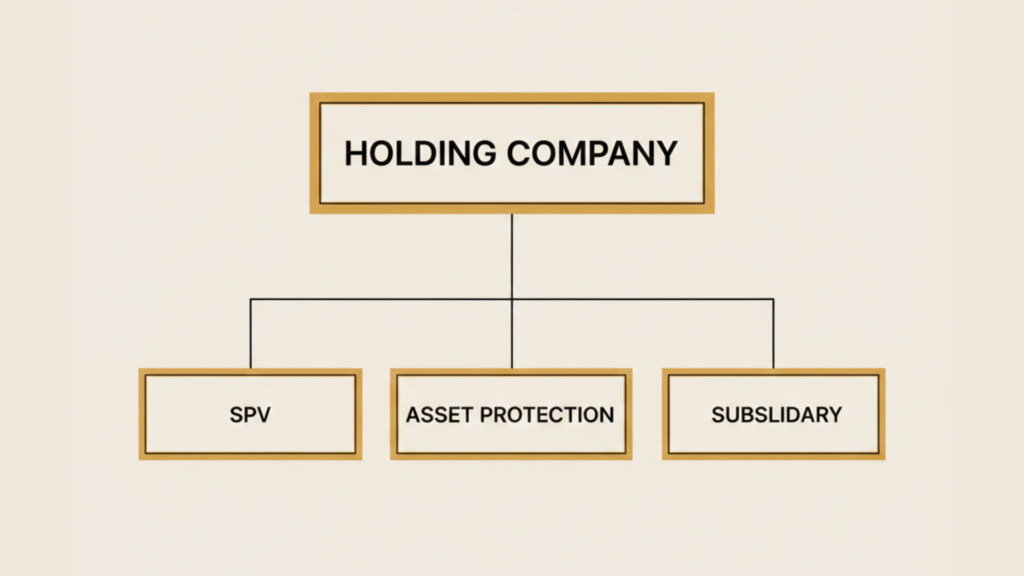
A shell company is a company with little or no independent operations. Unlike a shelf company (which is dormant before use), a shell company describes a company’s functional role during use. Shell companies are common in normal corporate structuring.
Legitimate uses of shell companies
Holding companies – Owning shares of operating subsidiaries
Real estate entities – Separating property ownership from operations
Special purpose vehicles (SPVs) – Used in investment and financing transactions
Merger vehicles – Temporary entities created to acquire another company
Liability separation – Protecting assets between business divisions
These uses exist across nearly every major corporate group worldwide.
Why Shell Companies Receive Scrutiny
Shell companies themselves are legal. However, regulators monitor them more closely because similar structures have been misused to hide ownership or obscure transactions.
Modern compliance systems evaluate:
- Beneficial ownership
- Transaction behavior
- Consistency with stated purpose
The structure is not illegal — lack of transparency is the problem.
Shelf Companies vs Shell Companies
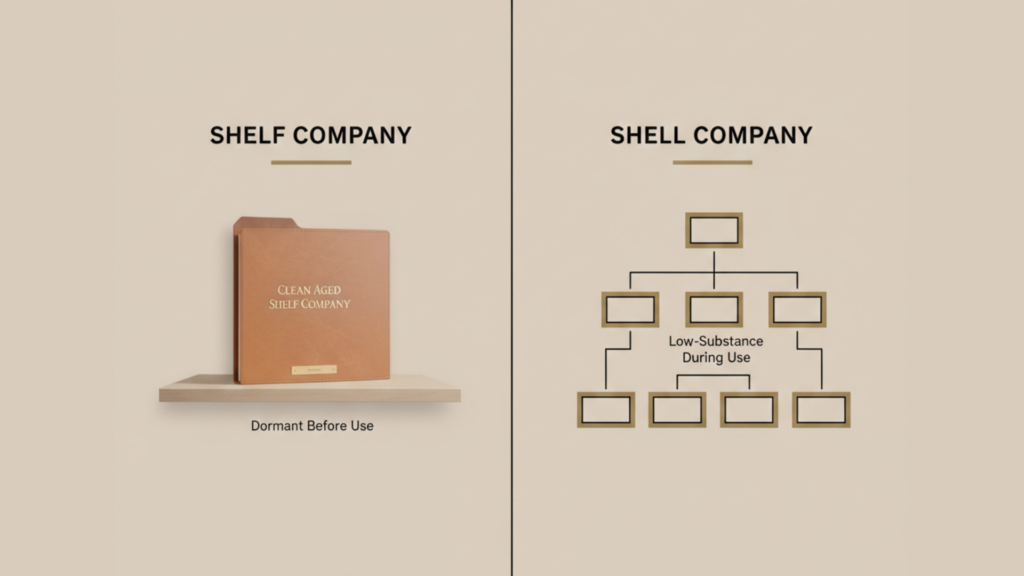
They are not separate entity types. They describe different conditions.
| Shelf Company | Shell Company |
|---|---|
| Dormant before use | Low-substance during use |
| Pre-operational | Structural operational entity |
| No operating activity yet | Limited operating activity |
| Neutral classification | Context-dependent classification |
A shelf company can become a shell company depending on how it operates after acquisition.
Business Formation Privacy States
Some jurisdictions provide greater public-record privacy than others. These are commonly
called privacy-friendly formation states.
Examples
- New Mexico LLCs
- Colorado entities
- Wyoming LLCs (partial privacy)
In these states, owners or managers may not appear in public Secretary of State databases.
What Privacy States Actually Mean
Privacy states do not eliminate compliance requirements. Even in privacy-friendly jurisdictions, banks and financial institutions still require:
- Identity verification
- Beneficial ownership disclosure
- Onboarding documentation
Privacy applies only to public records, not regulatory obligations. This distinction is essential when understanding business formation privacy laws.
Financing and Credibility Expectations
Many people research clean-aged shelf companies, expecting automatic financing advantages. In modern practice, lenders evaluate:
- Financial activity
- Tax filings
- Ownership identity
- Bank history
- Operational documentation
An older formation date may be reviewed as one factor, but it does not replace business performance history.
When Aged Shelf Companies Are Useful
Aged shelf companies can still provide legitimate operational benefits.
- Organizational efficiency – faster project startup
- Structural preparation – preparing entities for future transactions
- Corporate flexibility – separating risk and assets
- Administrative readiness – having an entity available when timing matters
These benefits relate to structure, not qualification bypassing.
Best Practices After Acquiring a Shelf Company
To maintain compliance
- Update ownership internally and with required parties
- Begin proper accounting immediately
- Maintain accurate records
- Disclose beneficial ownership where required
- Operate consistently with the stated business purpose
Substance matters more than age.
Frequently Asked Questions
Are aged shelf companies legal?
Yes. They are legal business entities when operated transparently and lawfully.
Do shelf corporations guarantee financing approval?
No. Approval depends on operational history and documentation.
What is a shell company used for?
Typically holding assets, structuring transactions, or separating liabilities.
Are privacy states anonymous?
They provide public-record privacy but not exemption from identity verification.
Are shelf companies risky?
Risk depends on transparency and documentation, not formation date.
Final Takeaway
Clean-aged shelf companies, shelf corporations, and shell companies are commonly
misunderstood because the terminology overlaps.
- A shelf company describes a company before use
- A shell company describes how a company is used
- Privacy states affect public records, not compliance requirements
The company’s credibility ultimately comes from its real activity, not just its age. Understanding that distinction helps businesses structure entities responsibly and avoid unrealistic expectations.